If you have ever followed the same diet as a male friend or partner and wondered why his results come faster — you are not imagining it. Female physiology, hormonal cycles, and metabolic rate genuinely make weight loss a different journey for women. A weight loss diet chart for female needs to account for these biological realities, not ignore them.
This guide gives you a practical, calorie-mapped 7-day weight loss diet chart built around Indian foods, alongside the hormonal science, calorie math, and situation-specific adaptations that most diet articles skip entirely — whether you have PCOS, a thyroid condition, are over 40, or are navigating a desk job and night shifts.
| Quick Summary — What This Guide Covers
• Who it’s for: Indian women aged 18–55, with vegetarian and non-vegetarian versions included.
• Calorie range: 1,200–1,500 kcal/day, scalable by age, weight, and activity level.
• What makes it different: Hormone-aware adaptations for PCOS, hypothyroidism, post-pregnancy, age 40+, and night-shift women.
• What you’ll get: A 7-day Indian diet chart, calorie table, macronutrient guide, situation-specific sections, and 9 FAQs.
• Realistic expectation: 0.5–0.75 kg of fat loss per week when followed consistently — not a crash diet, a sustainable framework. |
So, what is a weight loss meal chart for women? Simply put, it’s a daily eating schedule crafted just for you. This plan takes your individual calorie requirements, hormonal cycles and nutrients into consideration – generally falling between 1,200 and 1,500 calories per day – and incorporates a mix of macronutrients along with nutritious Indian food.
|
Why Weight Loss Works Differently in Women

Close crop of a relaxed Indian woman in soft morning light, calm meditative posture, natural indoor setting. No gym equipment, no text.
Before discussing what to eat, it helps to understand why your biology requires a different approach. This is not an excuse — it is physiology.
The Role of Oestrogen, Progesterone & Cortisol in Fat Storage
Oestrogen, the main female sex hormone, is responsible for the majority of fat deposition in a woman’s body, in the hips, thighs and breasts for most of her reproductive life. Post, perimenopause, inadequate oestrogen causes fat deposition to change and to move to the abdomen, in a more dangerous, metabolically active, area known as visceral fat. This hormonal change is why if you succeed with your diet at 28, it may seem to become ineffective at 44.
Progesterone levels (which are used to rise during the luteal phase, two weeks before your period) will cause a rise in calories burned byroughly100, 300/day as well as an additional 1, 2 kg of water retaining, which can often appear to be a gain on the scale. Cortisol, the stress hormone, causes storage of fat in the abdominal region and increases cravings for high sugar, high fat foods. Without a way to manage excess stress, it is impossible to succeed on a female weight loss plan.
How Muscle Mass Differences Affect Women’s Calorie Burn
Women have, on average, 10, 15% less lean muscle mass than men at the same body weight (it‘s in the NIH comparative body composition data set). Given that muscle tissue burns 3 times as many calories as fat tissue does just to stay alive, this translates directly into a lower BMR. In fact a 65 kg woman will burn 150, 250 calories less per day than a 65 kg man just sitting at home (and that gap grows considerably over time).
This is why strength training — not only cardio — is a non-negotiable part of female fat loss strategy. Muscle preservation protects the BMR and prevents the metabolic slowdown that causes most women to plateau within 4–6 weeks of dieting.
The Menstrual Cycle’s Impact on Hunger, Cravings & Metabolism
Your metabolism is not a set figure. Studies show that resting metabolic rate is about 100, 300 calories higher in the luteal phase than the follicular phase, due to the thermogenic effect of progesterone. This means that women burn a few extra calories during the two weeks pre, menstrually, but will also be hungrier and want to eat more.
Depending on this cycle same as with the excretory system, the food modifications are easier: follicular, hormone balanced, higher protein, lighter, simpler meals; luteal, things are a little more calorific, more mineral and hormone balanced.
Why Standard ‘1,200 Calorie’ Rules May Not Apply to Every Woman
Often we hear the “1,200 kcal mark” – a general benchmark not an absolute minimum for everyone. You don’t have the same caloric needs as your 5’2″, 55kg sedentary aunt as you do as your 5’7″, 78kg fit sister. The mistake of giving you a similar figure for everyone can result in a diet which doesn’t work, or an over-restrictive one. Our calorie table in the following section fixes that.
At a Glance — Strengths & Limitations of This Plan
| What This Plan Does Well |
What to Watch Out For |
| Culturally familiar — uses everyday Indian foods |
May feel restrictive in the first 5–7 days of adjustment |
| No expensive supplements or packaged diet foods |
Social eating situations require advance planning |
| Scalable to 1,200 / 1,500 / 1,800 kcal versions |
Results vary by starting weight, age, and activity level |
| Supports hormonal balance through whole foods |
Not a substitute for medical treatment of PCOS / thyroid |
| Sustainable — designed for long-term habit building |
Requires meal prep discipline; convenience foods won’t fit |
How Many Calories Does a Woman Need to Lose Weight?
Weight loss is a consistent calorie deficit, , eating less calories than your body uses. A 500, 750 kcal/day deficit below your TDEE works well for many women, around 0.5, 0.75 kg of fat loss per week without metabolic adaptation or endocrine disruption.
This 500–750 kcal range is consistent with guidance from major medical sources that describe a daily calorie deficit of about 500 calories as a practical, sustainable target for healthy weight loss in women WebMD calorie deficit guide.
Understanding Your BMR — With a Simple Estimate
The Mifflin-St Jeor equation — the most validated BMR formula for adult women, per the Academy of Nutrition and Dietetics:
BMR = 447.6 + (9.25 × weight in kg) + (3.10 × height in cm) − (4.33 × age in years)
Multiply your BMR by an activity factor (1.2 for sedentary, 1.375 for lightly active, 1.55 for moderately active) to get your TDEE. Your weight loss target is TDEE minus 500–750 kcal.
| Worked Example
A 30-year-old woman, 60 kg, 162 cm tall:
BMR = 447.6 + (9.25 × 60) + (3.10 × 162) − (4.33 × 30) = approx. 1,408 kcal/day
× 1.375 (lightly active) = TDEE ~1,936 kcal/day. Weight-loss target: 1,936 − 600 = ~1,336 kcal/day. |
Estimated Daily Calorie Requirements & Weight-Loss Targets by Age Group
| Age |
Sedentary |
Moderately Active |
Active |
Weight-Loss Target Range |
| 18–25 |
1,800 kcal |
2,000 kcal |
2,200 kcal |
1,200–1,350 kcal |
| 26–35 |
1,700 kcal |
1,900 kcal |
2,100 kcal |
1,200–1,400 kcal |
| 36–45 |
1,600 kcal |
1,800 kcal |
2,000 kcal |
1,100–1,300 kcal |
| 46–55 |
1,500 kcal |
1,700 kcal |
1,900 kcal |
1,050–1,200 kcal |
| 56+ |
1,400 kcal |
1,600 kcal |
1,800 kcal |
1,000–1,150 kcal |
Note: These are estimates. Individual variation in thyroid function, PCOS, sleep quality, and gut health can shift these numbers by ±10–15%. Always treat these as a starting point, not a prescription.
| Signs You Are Eating Too Little
Constant fatigue, hair thinning, cold hands and feet, irregular periods, and extreme brain fog after just 2+ weeks of dieting all indicate you are eating too few calories. Hair thinning in particular can have multiple causes — if you are noticing texture or structural changes alongside your diet, it may be worth reading about high porosity hair and how nutritional deficiency affects hair health.
Going below 1000kcal a day without GP supervision is dangerous, it can make you lose muscle mass, put you into deficiency states and throw your hormones out of whack. Values below 1200 are unsuitable for the vast majority of women without GP supervision; 1000cal is a hard limit in very exceptional, GP monitored cases only. |
Macronutrient Breakdown — What Every Woman’s Plate Should Look Like
Calories define how much you eat. Macronutrients define what you eat and how your body responds — whether you burn fat or muscle, feel satiated or constantly hungry, and maintain hormonal stability.
| Macronutrient |
% of Calories |
Daily Target |
Best Indian Sources |
| Protein |
30–35% |
~90–105g/day on 1,200 kcal |
Dal, paneer, eggs, chicken, curd, tofu, moong |
| Complex Carbs |
35–40% |
~105–120g/day |
Oats, brown rice, ragi, whole wheat roti, millets |
| Healthy Fats |
25–30% |
~35–45g/day |
Ghee (1 tsp), walnuts, flaxseeds, sunflower seeds |
| Fibre |
25–35g/day (goal) |
Non-negotiable for satiety |
Methi, palak, sabja seeds, flaxseeds, vegetables |
Protein — The Most Important Macro for Female Fat Loss
Protein trumps all the macronutrients for thermic effect, your body spends 20, 30% of protein calories just digesting it. It also maintains lean muscle in a deficit and is by far the most filling macronutrient, cutting down the desire to snack in between meals.
(1.2, 1.6g protein/kg body weight). Best Indian sources: moong and masoor dal, chana, low fat paneer, Greek yogurt, tofu, egg and non, veg. include enough chicken or fish to make up protein requirement.
Complex Carbohydrates vs Simple Carbs — The Right Choice
Complex carbs (oats, ragi, millets, whole wheat, brown rice) take a long time to digest thus stabilising blood sugar levels and avoiding insulin spikes which cause the body to shut up shop for fat storage. Simple carbs (white rice, maida, packaged biscuits, fruit juices) digest quickly, cause an insulin spike and leave you feeling hungry again in 60, 90 minutes.
Women with PCOS, insulin resistance or pre, diabetes need to monitor the GI (glycaemic index) of each of their carbs. Low, GI diets are dealt with under the PCOS adaptation section below.
Healthy Fats Women Should Not Eliminate
Fat is not the enemy of fat loss. Healthy fats from ghee (1 tsp/day), walnuts, flaxseeds, and sunflower seeds support oestrogen and progesterone synthesis, facilitate absorption of fat-soluble vitamins (A, D, E, K), and reduce inflammation — a key driver of hormonal weight gain in women.
The fats to limit are refined seed oils used in excess and trans fats in packaged snacks — not naturally occurring fats in whole foods.
Micronutrients Women on a Weight Loss Diet Must Prioritise
- Iron: women tend to run low on iron each month due to their menstrual cycle. Iron deprivation causes fatigue, which discourages physical activity and in turn reduces calorie expenditure. Sprouts, lentils, pomegranate and jaggery should be included daily. Take spinach, rajma, bajra and lemon (to increase absorption) daily.
- Calcium: keeps bones strong and dense (which decline faster in women than men after 40 years of age) and also modestly aids in fat metabolism. Curds and low fat paneer and ragi are good options.
- Vitamin D: most Indian women are deficient in this vitamin which is weakly correlated with fatness levels, insulin resistance and fatigue. Sun exposure and fortified foods/ supplements (under doctor supervision) should be used.
- Folate: women of child bearing age need the recommended daily intake of folate. Intake among women planning pregnancy reduces neural tube defect incidence in the offspring. Dark greens, sprouts and lentils are easily available Indian foods.
7-Day Weight Loss Diet Chart for Female (Indian Meal Plan)
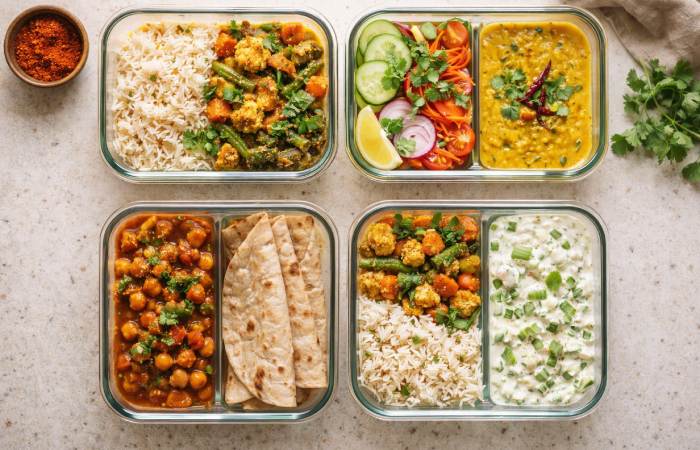
Batch-prepping dal, sabzi, and wholegrains two to three times a week removes the daily decision fatigue that derails most diet plans.
This chart is calibrated at approximately 1,200–1,280 kcal per day — suited for a sedentary to lightly active woman. Use the scaling table below the chart to adjust for your activity level and calorie target.
7-Day Vegetarian Diet Chart (1,200–1,280 kcal/day)
| Day |
Breakfast (~300 kcal) |
Mid-Morning (~80 kcal) |
Lunch (~450 kcal) |
Evening Snack (~100 kcal) |
Dinner (~350 kcal) |
~Total |
| Day 1 |
Oats porridge with skimmed milk + 5 soaked almonds |
1 medium apple |
1 roti + moong dal (1 cup) + cucumber raita |
Green tea + 1 rice cake |
Grilled paneer (100g) + mixed vegetable sabzi + salad |
~1,240 |
| Day 2 |
2 moong dal chilla + green chutney |
Buttermilk (1 glass, no salt) |
Brown rice (½ cup) + rajma (¾ cup) + spinach sabzi |
Roasted chana (30g) |
Palak soup + 1 roti + tofu bhurji |
~1,270 |
| Day 3 |
Besan vegetable upma (1 cup) |
1 guava or orange |
2 roti + chana dal + lauki sabzi |
Cucumber + carrot sticks with hummus (2 tbsp) |
Mixed dal (¾ cup) + stir-fried broccoli + salad |
~1,250 |
| Day 4 |
Greek yogurt (100g) + 1 tbsp flaxseeds + berries |
Handful of walnuts (4 halves) |
Vegetable khichdi (1 cup) + low-fat curd |
Masala chaas |
Grilled paneer tikka + sautéed green beans |
~1,260 |
| Day 5 |
Ragi dosa (2) + sambar + green chutney |
1 small banana |
1 roti + masoor dal + bhindi sabzi |
Green tea + 4 almonds |
Vegetable clear soup + tofu & vegetable stir-fry |
~1,230 |
| Day 6 |
Poha with vegetables (1 cup) + 1 boiled egg |
Coconut water (1 glass) |
Brown rice (½ cup) + kadhi (1 cup) + salad |
Roasted makhana (30g) |
Moong dal soup + 1 roti + mixed salad |
~1,280 |
| Day 7 |
Whole wheat toast (2 slices) + peanut butter (1 tsp) + 1 boiled egg |
Papaya (1 cup) |
2 roti + chole (¾ cup) + baingan sabzi |
Green tea + 1 rice cake |
Grilled paneer (80g) + vegetable clear soup + salad |
~1,260 |
Portions: All cooked measurements are post-cooking unless specified raw. Water intake: minimum 2.5–3 litres daily. Cooking oils: maximum 2 tsp per day of cold-pressed mustard oil, ghee, or olive oil.
Is This Diet Chart Right for You?
| ✅ This plan suits you if… |
⚠ Use caution / consult a doctor if… |
| You are an adult woman (18–55) in general good health |
You are pregnant or actively breastfeeding |
| You want to lose 0.5–1 kg per week sustainably |
You have a diagnosed eating disorder history |
| You eat Indian whole foods regularly |
You are under 18 or over 65 without medical supervision |
| You are vegetarian or non-vegetarian (swap guide included) |
You have Type 1 diabetes or are on insulin therapy |
| You have PCOS or thyroid concerns (use adapted section below) |
You are on medication that significantly affects appetite or metabolism |
Non-Vegetarian Variation — Key Meal Swaps
Non-vegetarian women do not need a completely separate chart. Replace the protein sources below while keeping all vegetables, rotis, and timing identical.
| Vegetarian Item |
Non-Veg Swap |
Nutritional Note |
| Paneer (100g) |
Grilled chicken breast (100g) |
+8g protein, −3g fat |
| Moong dal |
Egg white omelette (3 whites) |
Lower carbs, higher protein |
| Tofu bhurji |
Scrambled eggs (2 whole) |
Higher bioavailable protein |
| Rajma / chole |
Boiled chicken + chickpeas (½ each) |
Moderate carbs + protein |
| Besan chilla |
Egg & vegetable omelette |
Lower GI, rich in choline |
How to Scale This Chart to Your Calorie Goal
One chart, three calorie levels. Adjust based on your activity level from the table in Section 2.
| Calorie Target |
Modification from Base Chart |
| 1,200 kcal |
Follow the chart exactly as written. |
| 1,500 kcal |
Add 1 extra roti at lunch + 50g additional paneer or dal. |
| 1,800 kcal |
Apply the 1,500 kcal change above, then add a post-workout snack: 100g Greek yogurt + 1 low-GI fruit. |
Recalculate if you update your weight or exercise level or goal. Never allow your Calories to drop below your “calorie floor” (the minimum number of calories recommended for your weight, activity level, and goal, generally no lower than 1200 kcal for most women unless you are being monitored by a medical professional).
South Indian adaptation, Use 2 idli or 1 plain dosa instead of roti, replace dal with sambar and replace paneer with fish curry(100g, mild spices). Ragi mudde makes a better millet than white rice. North, Eastern adaptation, Replace dal with fish or lentil stew and replace thegreen with local greens. For example, replace with mustard leaves or fiddlehead ferns.
Meal Timing Guide — When You Eat Matters
Research suggests that earlier calorie distribution — front-loading calories toward the first half of the day — supports better weight loss outcomes in women, likely due to circadian regulation of insulin sensitivity.
- 7:30–8:30 AM — Breakfast (largest meal of the first half)
- 10:30–11:00 AM — Mid-morning snack
- 1:00–1:30 PM — Lunch
- 4:00–4:30 PM — Evening snack
- 7:00–7:30 PM — Dinner (lightest meal; finish 2–3 hours before sleep)
Eating dinner after 9 PM consistently is associated with poorer weight management outcomes in women, partly due to reduced insulin sensitivity at night.
Best Indian Foods for Female Weight Loss
| The best Indian foods for female weight loss are high-protein legumes (moong dal, chana, paneer), high-fibre grains (ragi, oats, millets), and low-calorie vegetables (spinach, cucumber, bottle gourd) — all of which support a sustained calorie deficit without creating nutritional gaps. |
High-Protein Indian Foods for Women
- Moong dal — 24g protein per 100g dry; highly digestible, low GI
- Paneer (low-fat) — 18g protein per 100g; rich in calcium and casein (slow-digesting)
- Chana / chickpeas — 19g protein per 100g; also high in fibre and iron
- Greek yogurt — 10g protein per 100g; probiotic, supports gut health during weight loss
- Tofu — 8g protein per 100g; isoflavones mildly support oestrogen balance
- Egg whites — 11g protein per 100g; near-zero fat, highly satiating
High-Fibre Foods That Control Hunger
- Ragi (finger millet) — 11g fibre per 100g; also rich in calcium
- Methi (fenugreek) — soluble fibre slows glucose absorption; assists insulin sensitivity in PCOS
- Oats — beta-glucan fibre reduces LDL cholesterol and prolongs satiety
- Sabja (basil seeds) — expand in water, creating a filling gel; excellent pre-meal hunger suppressant
- Palak (spinach) — 2.2g fibre per 100g, extremely low calorie, rich in iron and folate
Low-Calorie Foods to Eat Freely (Under 30 kcal per 100g)
- Cucumber, bottle gourd (lauki), ridge gourd (turai), tomatoes
- Mushrooms, cabbage, cauliflower, broccoli, lettuce
- Lemon water, plain green tea, plain chaas (buttermilk without salt or sugar)
Healthy Indian Snack Alternatives That Won’t Break Your Deficit
- Roasted makhana (30g) — ~110 kcal, high protein, low fat
- Roasted chana (30g) — ~105 kcal, 6g protein, high fibre
- Carrot + cucumber sticks with 2 tbsp hummus — ~120 kcal
- 1 small banana — ~90 kcal, potassium, pre-workout energy
- 4 walnut halves — ~100 kcal, omega-3, brain and hormonal support
Foods and Drinks to Avoid for Female Weight Loss
| The foods most likely to stall weight loss for Indian women are not obvious junk food — they are ‘healthy’ packaged items: digestive biscuits, fruit yogurt with added sugar, namkeen, and packaged fruit juices. Knowing exactly what to cut is as important as knowing what to eat. |
Foods That Secretly Stall Weight Loss
- Namkeen / bhujia — marketed as light snacks; 150g contains ~800 kcal and excess sodium (causing water retention)
- Store-bought biscuits — even ‘digestive’ or ‘oat’ biscuits contain refined flour, vegetable shortening, and 70–80 kcal per biscuit
- ‘Diet’ or ‘fruit’ yogurt — commercial versions contain 15–25g added sugar per 100g; choose plain curd instead
- White poha or plain puffed rice — extremely low protein, spikes blood sugar rapidly, hunger returns within 90 minutes
- Packaged ‘health’ drinks — most contain 12–18g sugar per serving; not appropriate for weight loss
- Fruit juices (even fresh) — removes fibre, concentrates sugar; 250ml fresh orange juice = ~110 kcal with no satiety vs one whole orange = ~60 kcal with fibre
Drinks to Reduce or Eliminate
- Chai with 100ml full-fat milk + 2 tsp sugar = ~90 kcal per cup; 3 cups daily adds ~270 kcal before a single meal
- Packaged cold drinks / soda — 330ml = 35–40g sugar (~140 kcal), zero nutrition
- Coconut sugar, jaggery, honey — these are still sugar; do not treat them as free foods
- Alcohol — 1 large glass of wine = ~180 kcal; also disrupts cortisol, sleep, and appetite regulation the following day
The Cheat Meal Framework — Treats Without Derailing Progress
One well planned cheat meal a week (not a cheat day) doesn‘t hinder ongoing weight loss and greatly enhances long, term compliance., Maintain cheat meals & snacks at a maximum total of 700 kcal. That will still allow for a little bit of indulgence without undoing all of that week‘s caloric deficit.
Strategy: eat your planned protein-rich breakfast and lunch before the cheat meal — this reduces the likelihood of overeating at the cheat meal by 30–40% compared to skipping meals beforehand.
Adapting the Diet Chart for Your Specific Situation
No two women have identical hormonal profiles, health conditions, or life contexts. This section provides the targeted adaptations that generic diet charts never include.

Batch-prepping dal, sabzi, and wholegrains two to three times a week removes the daily decision fatigue that derails most diet plans.
Weight Loss Diet for Women with PCOS
Polycystic Ovary Syndrome (PCOS) involves insulin resistance as a core mechanism, which means the standard calorie-counting approach is necessary but insufficient. Women with PCOS need a low-glycaemic-index framework within their calorie target.
Clinical nutrition recommendations for PCOS similarly emphasise low-glycaemic eating patterns to improve insulin resistance and cycle regularity, not just weight loss PCOS nutrition recommendations.
Specific adaptations for PCOS:
- Replace white rice with millets (bajra, jowar, ragi) or cauliflower rice to reduce glycaemic load
- Fenugreek seeds: soak 1 tsp overnight, consume in the morning — research suggests this supports insulin sensitivity
- Anti-inflammatory priority: turmeric (daily), walnuts and flaxseeds (omega-3), and fatty fish if non-vegetarian
- Limit fruit to 1–2 servings of low-GI options daily: papaya, berries, or guava
- Inositol-rich foods (citrus, legumes) may support ovarian function — include daily
- Probiotic curd or buttermilk daily to support gut-hormone axis
A PCOS-specific weight loss target of 0.5 kg/week is realistic. Even a 5–10% body weight reduction can meaningfully improve menstrual regularity and hormonal markers.
Weight Loss Diet for Women with Hypothyroidism
A slow thyroid results in a decreased BMR of about 5, 15%. So women with hypothyroidism can require up to 100, 200 fewer kilocalories than age, match controls in the comparison of the energy deficits, or they can just work harder at increasing activity.
Specific adaptations: Add selenium, rich foods, , Brazil nuts (1, 2/day), sunflower seeds, brown rice to aid thyroid hormone enzyme production. Maintain sufficient iodine, , iodised salt (not too much). Reduce large amounts of raw goitrogens, , cruciferous veg (broccoli, cauliflower, cabbage) are fine when cooked in moderation; raw in large quantities, some people may experience disruption of thyroid hormone synthesis. Focus on gut, friendly foods (curd, fermented foods) since the gut, brain, thyroid axis is bidirectionally linked.
Important: You will need to increase magnesium, iron and other nutrients. Selenium and iodine are necessary but not sufficient, , Dietary changes additionally complement the prescribed thyroid medication and cannot replace it. Do not adjust medication without your doctor!
Post-Pregnancy Weight Loss Diet
Weight loss after delivery depends on a different basal point, this second basal point is used in both breastfeeding and non, breastfeeding women. For the breastfeeding woman this extra basal point is also 400, 500 Kcal, because going below this level would be a risk to milk supply and the mother‘s nourishment.
For non, breastfeeding women: start a mild 400, 500 kcal cut 6, 8 weeks postpartum once cleared by your health care provider. Focus on: iron (to replenish peri, partum blood loss), calcium (for rebuild of bone density), and protein (for muscle regain). Eliminate crash dieting, , rapid post preg weight loss leads to loss of muscle and exacerbates fatigue and choleostasis.
Reasonable expectation: 0.5kg/week for the first 3, 4months postpartum is reasonable and maintainable; the majority of women who gained according to recommendation during pregnancy, will regain pre, pregnancy weight within 12 months with mild but consistent dietary regulation.
Diet Chart Adjustments for Women Over 40
The perimenopause may start in your mid, late 30s, leading to a fall in oestrogen, loss of muscle tone and a change in fat storage to mainly the abdomen. Weight loss is not so easy but still possible, with changes to diet and exercise.
Major changes: increase protein to 1.4, 1.6g/kgBW to prevent muscle loss (sarcopenia) increase calcium to 1000, 1200 mg/day (ragi, curd, low fat paneer, sesame seeds) Increase Vitamin D, , deficiency lead to faster bone loss and also is associated with more abdominal fat accumulation after menopause. Reduce refined sugar more aggressively since insulin sensitivity is lower. We can add strength training at least 3 days/week, , this is the single lifestyle intervention that has the most impact for women above 40 who want to maintain weight loss
Diet Plan for Working Women (Office & Night Shift Adaptations)
Office: Batch-cook 2–3 days of dal, sabzi, and chapatis on Sunday. Keep roasted chana, makhana, and walnuts at your desk. Replace midday vending machine snacks with prepared tiffin meals. Use the timing framework from the previous section.
Night shift: Align your ‘breakfast’ with when you wake up (e.g., 5 PM), not with traditional morning hours. Eat your largest meal before your shift begins. Meal composition during night-shift hours should emphasise protein and vegetables over high-carbohydrate foods — circadian misalignment reduces insulin sensitivity between 10 PM and 4 AM, meaning carbohydrates consumed during this window are processed less efficiently. Keep night-shift meals to 300–350 kcal, protein-first. Keep the meal before sleeping light and protein-rich. Avoid high-sugar foods during the night entirely.
Lifestyle Habits That Make or Break Your Diet Chart
A diet chart alone has a ceiling. The women who sustain weight loss beyond 3–6 months consistently pair their meal plan with these non-negotiable lifestyle habits.
Sleep and Weight Loss — The Ghrelin-Leptin Connection
Sleep deprivation raises ghrelin (the hunger hormone) and suppresses leptin (the satiety hormone). A study published in the Annals of Internal Medicine (2010) found that sleeping 5.5 hours versus 8.5 hours while on a calorie-controlled diet resulted in significantly more fat retention and muscle loss. Broader research on sleep and metabolism also shows that short sleep is associated with reduced leptin, elevated ghrelin, increased hunger, and higher body weight over time NIH review on sleep and metabolism.
For women, this effect is compounded by cortisol elevation from poor sleep, which further promotes abdominal fat storage.
Target: 7–8 hours of consistent sleep. Practical tip: Avoid screens 45 minutes before bed and eat your last meal at least 2 hours before sleeping.
Stress Management for Cortisol-Driven Weight Gain
Chronically elevated cortisol promotes visceral fat storage, increases sugar cravings, and suppresses the reproductive hormones that regulate metabolism in women. Reducing stress is not a luxury in female weight management — it is a physiological requirement.
Practical interventions: 10 minutes of daily deep breathing or meditation, morning walks (which lower cortisol while increasing BDNF), and reducing caffeine after 2 PM (which extends cortisol elevation into the evening).
Hydration — How Much Women Actually Need During Weight Loss
Women undergoing a calorie deficit and increasing physical activity may need around 2.7–3.5 litres of total fluid daily, including water from fruits, vegetables, dal, and tea. The standard ‘8 glasses’ is a rough starting point, not a ceiling.
- Pre-meal hydration: Drink 400 ml of water 30 minutes before each main meal — shown in research settings to measurably reduce meal calorie intake.
- Hydration check: Urine should be pale yellow. Dark yellow = drink more immediately. Clear = well-hydrated.
The Role of Strength Training vs Cardio for Female Fat Loss
Cardio burns more calories per session. Strength training burns more calories at rest — for 24–48 hours post-exercise — through the Excess Post-Exercise Oxygen Consumption (EPOC) effect and through the muscle mass it builds over time.
The optimal combination for women: 2–3 sessions of strength training per week (bodyweight, resistance bands, or weights) + 2–3 sessions of moderate cardio (brisk walking, cycling, swimming). This combination supports fat loss, muscle preservation, bone density, and hormonal regulation simultaneously.
How to Track Progress Beyond the Scale
The weighing scale is a useful data point — but it is a misleading primary metric for women. Understanding what actually signals progress will keep you on track through plateaus and hormonal fluctuations.
Why the Scale Misleads Women — and What to Track Instead
A woman’s weight can fluctuate by 1–3 kg within a single week due to water retention from hormonal changes (especially in the luteal phase), bowel activity, sodium intake, and muscle gain from strength training. Seeing the scale rise during week three of a diet is not failure — it is often muscle gain, hormonal water retention, or both.
Better metrics to track alongside — or instead of — scale weight:
- Body measurements (waist, hips, upper arms, thighs) — taken every 2 weeks
- Clothing fit — how do your clothes feel vs 4 weeks ago?
- Energy levels and afternoon fatigue — are they improving?
- Sleep quality and mood stability
- Resting heart rate (declining over weeks = improving cardiovascular fitness)
- Period regularity — a sign of improving hormonal health
Weighing Frequency and What to Do When Progress Stalls
For most women, this will be around 1,200 kcal; going lower should only be done with medical guidance.
If you track scale weight, weigh yourself at the same time every morning (after using the bathroom, before eating) and take a weekly average rather than reacting to daily fluctuations. A consistent downward weekly average over 3–4 weeks is meaningful. A single day’s reading is not.
What to expect week by week:
- Week 1: A 1–3 kg drop is likely — primarily water weight and glycogen depletion, not fat. Do not celebrate or panic based on this number.
- Weeks 2–4: 0.5–0.75 kg/week fat loss begins as water weight normalises. This is when real progress starts.
- Month 2: Rate may slow to 0.25–0.5 kg/week — a sign of normal metabolic adaptation, not failure. Do not restrict further without reassessing.
- Month 3+: Reassess your calorie target. If you haven’t added strength training yet, now is the time — it breaks most plateaus
A weight loss plateau after 4–8 weeks is normal. Two evidence-based responses: (1) Reduce calories by a further 100–150 kcal through a smaller snack portion, or (2) increase NEAT (Non-Exercise Activity Thermogenesis) — more walking, taking the stairs — rather than cutting food further. Never drop below your safe calorie floor.
Frequently Asked Questions
Q: How many calories should a woman eat per day to lose weight?
A: Most women lose weight effectively on 1,200–1,500 kcal per day, depending on age, weight, height, and activity level. The safest approach is to calculate your TDEE using the Mifflin-St Jeor equation in this guide and subtract 500–750 kcal. Never go below 1,000 kcal without direct medical supervision, as this risks muscle loss, hormonal disruption, and nutrient deficiency.
Q: Is a 1,200-calorie diet safe for all women?
A: Not universally. For a sedentary woman under 65 kg, 1,200 kcal can be appropriate short-term. For taller, heavier, or more active women, 1,200 kcal is likely too low and will cause muscle loss and metabolic slowdown. Use the calorie table in this article to find your age- and activity-adjusted starting point. Always assess based on your individual metrics, not a one-size number.
Q: Can I follow this diet chart if I have PCOS?
A: Yes, with modifications. Women with PCOS should use a low-GI version of this chart — replacing white rice with millets, limiting high-sugar fruits, increasing fenugreek (1 tsp soaked overnight, consumed daily), and including inositol-rich foods. The PCOS-specific section of this article outlines all adaptations. Consult your gynaecologist or endocrinologist if you are also on medication for insulin resistance.
Q: What should I eat for breakfast to lose weight as a woman?
A: The best breakfast for female weight loss is high in protein and fibre, moderate in complex carbs, and contains under 300 kcal. Top options from this chart: moong dal chilla (2 pieces), oats porridge with skimmed milk and almonds, ragi dosa with sambar, or besan vegetable upma. Women who eat breakfast consistently lose more weight than those who skip it, according to multiple longitudinal studies.
Q: Can I lose weight without exercise by following this diet chart?
A: Yes — weight loss is primarily driven by a calorie deficit, which diet creates on its own. However, without exercise — particularly strength training — a significant portion of the weight lost will be muscle mass, not fat. This reduces your BMR over time and makes regaining weight easier. Pairing this diet with at least 2–3 strength sessions per week is strongly recommended for sustainable results.
Q: How much weight can a woman realistically lose in one month with this plan?
A: Following the 1,200–1,500 kcal plan consistently with a 500 kcal daily deficit, a realistic expectation is 2–3 kg per month of actual fat loss. The first week may show an additional 1–2 kg of water weight loss, making early results look faster than they are. Sustainable fat loss for women averages 0.5–0.75 kg per week — equating to 2–3 kg per month.
Q: Is intermittent fasting safe for women trying to lose weight?
A: Intermittent fasting can be effective, but it requires careful implementation for women. Some women — particularly those with irregular menstrual cycles, a history of disordered eating, or high cortisol — find that aggressive protocols (16:8 or 18:6) disrupt hormonal balance and sleep. A gentler 12:12 window (eating within 12 hours, fasting for 12) is a safer starting point. Consult your doctor before attempting longer fasting windows.
Q: Should women avoid carbohydrates to lose weight?
A: No. Completely eliminating carbohydrates is unnecessary and counterproductive for most women. Complex carbohydrates — ragi, millets, oats, whole wheat roti — provide fibre, micronutrients, and energy for hormonal synthesis and exercise performance. The goal is to replace refined carbohydrates (maida, white rice, packaged snacks) with complex options, not to eliminate carbs as a category.
Q: What is the best time to eat dinner for weight loss as a woman?
A: Finishing dinner by 7:00–7:30 PM — at least 2–3 hours before sleeping — supports better weight management outcomes in women. Evening meals consumed after 9 PM coincide with a period of reduced insulin sensitivity, increasing the likelihood that calories are stored rather than used for energy. Earlier dinner also improves sleep quality, which further supports fat loss through ghrelin-leptin regulation.
Final Verdict — Sustainable Female Weight Loss: What Actually Works
The most effective weight loss diet chart for female is not the most restrictive one — it is the one you can follow without sacrificing your hormonal health, energy levels, or cultural food identity. The 7-day chart in this guide achieves that by using foods available in every Indian kitchen, calibrated to realistic calorie targets, and adapted for the biological realities that make female weight loss a genuinely different process.
Track your weekly average weight, prioritise sleep and stress alongside food choices, and pair this chart with at least 2–3 sessions of strength training per week. Adjust your calorie level every 4–6 weeks based on progress — and be patient. Sustainable fat loss for most women takes 3–6 months of consistent effort, not 2 weeks of extreme restriction. If you are also navigating medication-assisted weight loss, our guide on how to not gain weight after stopping Ozempic covers the transition strategies worth knowing.
If you have a diagnosed condition — PCOS, hypothyroidism, or insulin resistance — treat this weight loss diet chart for female as a strong, evidence-informed starting point, and work with a registered dietitian to personalise the specifics.
Citation and Methodology
This guide is evidence-informed rather than a formal clinical guideline. Wherever possible, calorie ranges, weight-loss rates, and hormonal mechanisms are based on peer-reviewed research, large health-organization resources, or clinical nutrition reviews
(for example, NIH- and PMC-indexed reviews on diet strategies for weight loss. These sources typically recommend modest daily calorie deficits and sustainable, food-based interventions rather than extreme restriction.
All external links in this article are provided so you can trace key claims back to their underlying studies or medical organizations. However, nutrition and weight-loss research is inherently variable, and individual responses differ; this article should be used as an educational starting point, not a substitute for personalised medical advice from your doctor or a registered dietitian.
About Healthbloomin.com
Healthbloomin.com publishes practical, easy‑to‑understand content across health, technology, business, marketing, and lifestyle. Articles are based primarily on reputable, publicly available information, with AI tools used only to support research, organisation, and clarity. The focus is always on real‑world usefulness rather than jargon or unnecessary complexity.
Disclaimer
Content on Healthbloomin.com is for general information only and is not a substitute for professional medical or nutritional advice. Always consult a qualified healthcare provider before starting or changing any diet, exercise plan, or treatment, especially if you have a medical condition, are pregnant, or are breastfeeding.