What Are People Really Asking?
If you’re eyeing VLCC De-Tan SPF 50 PA+++ Sunscreen, you’re probably wondering: Does it actually work for oily Indian skin in our heat? Will it leave a weird white cast or make me greasy by lunch? And is it really worth paying around the mid‑budget price when there are so many sunscreens fighting for attention?
After going through hundreds of real user reviews across major Indian platforms and comparing it with similar sunscreens, here’s an honest, no‑fluff breakdown to help you decide before you add it to cart.
Verdict: Should You Buy It?
- Buy if: You have oily or combination skin, need daily protection for office/indoor‑outdoor use, want a reasonably matte finish under makeup, and prefer budget‑friendly options in the lower‑to‑mid price range rather than premium sunscreens.
- Skip if: You have very dry or highly sensitive skin, need strong water resistance for swimming or sports, prefer fragrance‑free formulas, or want a strictly mineral (zinc/titanium only) sunscreen.
- Bottom line: VLCC De‑Tan SPF 50 PA+++ is a solid everyday sunscreen for oily and combination skin on a budget, but it’s not built as a heavy‑duty outdoor or sports sunscreen.
Product Overview
What Is VLCC De-Tan SPF 50 PA+++?
Packaging view of VLCC De-Tan SPF 50 PA+++ showing SPF rating and product claims.
VLCC De‑Tan Sunscreen Gel Crème is a primarily chemical‑filter sunscreen formulated to provide broad‑spectrum UV protection. It is commonly sold in a 100 g tube, often bundled with bonus quantity (for example 100 g + 10 g or 100 g + 25 g in promotional packs), and is generally priced in the budget‑to‑mid range depending on retailer and ongoing discounts.
SPF 50 indicates high protection against UVB rays, which are mostly responsible for sunburn, while the PA+++ rating signals strong UVA protection that helps reduce tanning, pigmentation, and premature skin aging. Dermatology bodies such as the American Academy of Dermatology recommend using a broad‑spectrum sunscreen of at least SPF 30 for daily protection.
According to AAD resources, SPF 30 blocks about 97% of UVB rays, and higher SPFs like SPF 50 block slightly more, but no sunscreen blocks 100%. The World Health Organization also advises using broad‑spectrum sunscreen of at least SPF 30, applied generously and reapplied every two hours, as part of a full sun‑protection routine (shade, clothing, hats, sunglasses).
Key Claims vs Reality
Brand claims vs. what actually happens on skin:
| Brand claim |
Reality check |
| De-tan formula |
No sunscreen removes existing tan; it mainly helps prevent further tanning and pigmentation when used consistently with proper amount and reapplication. |
| Non-greasy, matte finish |
Many users with oily or combination skin describe it as non‑sticky with a relatively matte or semi‑matte finish, especially in hot Indian weather. |
| Lightweight gel texture |
Texture is generally reported as light gel‑cream that spreads easily and absorbs in a couple of minutes for most users. |
| Broad-spectrum protection (SPF/PA) |
The product is marketed as SPF 50 PA+++, indicating broad UVB and UVA coverage suitable for everyday use when applied correctly. |
The important clarification: a “de‑tan” label is marketing; you still need separate actives (like exfoliating acids or vitamin C) or professional treatments to actually fade existing pigmentation.
Ingredient Breakdown
Active UV Filters
VLCC De‑Tan SPF 50 uses mainly chemical UV filters, with some variants also including mineral content. Publicly available ingredient analyses list filters such as:
-
Ethylhexyl Methoxycinnamate (Octinoxate): Primarily absorbs UVB rays.
-
Butyl Methoxydibenzoylmethane (Avobenzone): Provides UVA protection, especially in the UVA1 range.
-
Titanium Dioxide: A mineral filter used in some versions of this product for additional UV protection, typically helping with both UVB and some UVA coverage.
Exact filter combinations can vary slightly by batch or regional packaging, so it is always wise to check the current INCI list on your own tube.
Chemical sunscreens primarily work by absorbing UV radiation and converting it to a small amount of heat, and they tend to leave less visible white cast than purely mineral formulas based on zinc oxide or titanium dioxide alone.
Other Notable Ingredients
In addition to UV filters, the formula includes a mix of emollients, humectants, and silicones for slip and spreadability; typical components include:
-
Glycerin: A humectant that helps attract and hold water in the top layers of the skin, providing basic hydration support.
-
Silicone derivatives (e.g., Dimethicone-like ingredients): Help create a smoother surface and can make the sunscreen feel more lightweight and suitable under makeup.
-
Plant extracts: Some versions highlight ingredients such as carrot, aloe vera, and other botanical extracts for added soothing or “de‑tan” marketing appeal, though their actual impact on UV protection is secondary.
-
Fragrance: The formula contains added fragrance, which improves sensorial experience for some users but can be irritating for very sensitive or reactive skin.
Because manufacturers may update formulas over time, always check packaging if you are allergic to specific ingredients or are sensitive to fragrance, silicones, or certain chemical filters.
Safety Considerations
Regulators and medical bodies emphasize that sunscreen is a key tool in reducing UV damage and helping lower skin‑cancer risk when used correctly. The FDA and similar agencies have historically allowed a wide range of UV filters while continuing to request more safety data for some ingredients; currently, zinc oxide and titanium dioxide have the strongest “generally recognized as safe and effective” status, but other filters remain approved for use while data collection continues.
VLCC De‑Tan SPF 50 uses commonly used filters that are allowed in many markets, and there is no widespread evidence of serious harm from normal topical use in the general population; however, individuals with known allergies should still patch‑test and consult a dermatologist if unsure.
Because it relies mainly on chemical filters, this sunscreen may not match stricter “reef‑safe” preferences in some regions; there is no single regulated definition of “reef‑safe”, so eco‑conscious users may want to research specific filters and follow local guidance for marine environments.
Texture, Finish & Performance
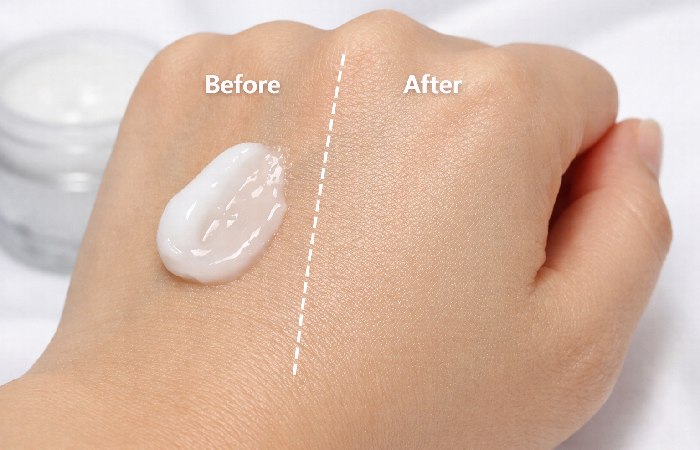
The lightweight gel-cream texture spreads easily and absorbs within a few minutes.
Does It Leave a White Cast?
Most reviewers across different Indian skin tones note that the product blends in relatively well and does not leave a strong, opaque white cast once it has been properly massaged in and allowed to sit for a few minutes. Any initial lightness typically fades as it absorbs, especially because it relies more on organic filters than heavy mineral coverage.
Application tip: Apply it in two thin layers rather than one thick blob, giving each layer a short time to settle; this helps reduce any temporary paleness and improves even coverage.
Greasiness & Finish
-
Finish: Users frequently describe the finish as semi‑matte to matte on oily and combination skin, especially in hot and humid conditions, though some people with normal skin find it closer to a natural satin finish.
-
Oily skin: Many oily‑skin reviewers say it feels relatively light and doesn’t make them look extra shiny by midday compared to heavier cream sunscreens.
-
Dry skin: Some dry‑skin users mention that it can feel a bit tight or not hydrating enough if used alone, especially in drier climates or in AC environments.
The gel‑cream texture spreads easily without a heavy or waxy feel for most people, and typically settles within 2–3 minutes before makeup.
Sweat & Water Resistance
VLCC does not market this product as water‑resistant; there is no “40 minutes” or “80 minutes” water‑resistant claim on the pack. That means it is designed mainly for daily commuting, indoor‑outdoor office life, and light exposure rather than intense beach days or heavy workouts.
With everyday use (walking outside, short commutes), many people find it stays comfortable as long as they reapply at reasonable intervals, but heavy sweating or swimming will likely break it down faster and require reapplication or a more water‑resistant sunscreen.
Makeup Compatibility
A lot of users mention that it layers decently under makeup without obvious pilling when used correctly. The smoother silicone‑based texture can help foundation or BB cream glide on more evenly, especially for oily skin types that prefer a more matte base.
Best practice: Apply sunscreen on clean skin (or after skincare), wait a few minutes for it to set, and then go in with primer or foundation to reduce any risk of pilling.
Skin Type Suitability
Oily Skin
This is where VLCC De‑Tan SPF 50 tends to shine. Many oily and combination‑oily users report that it does not feel overly greasy, helps control shine reasonably well in Indian weather, and works fine as a makeup base.
Typical feedback from this group: lightweight, no heavy stickiness, and no obvious white cast, which makes it appealing for everyday office or college wear.
Combination Skin
Combination‑skin users usually find it comfortable if they adjust application slightly, such as using a bit less on naturally drier cheek areas or layering it over a light moisturizer on those spots.
On the oilier T‑zone, it can provide decent shine control without feeling like a thick cream, making it an acceptable “one‑tube” option for face and neck.
Dry Skin
If you have dry or very dry skin, VLCC De‑Tan SPF 50 may feel a little short on moisture, especially in non‑humid conditions or with strong indoor AC. Several dry‑skin users mention a sense of tightness or mild flakiness without a hydrating layer underneath.
Workaround: Use a hydrating serum and/or a good moisturizer first, let it absorb, and then apply the sunscreen to reduce dryness and improve comfort.
Acne-Prone Skin (With Caveats)
The lightweight gel‑cream and non‑oily feel make it more comfortable for many acne‑prone people compared with thick, occlusive creams. However, every acne‑prone skin reacts differently; a small subset of users report breakouts that may be related to fragrance, silicones, or specific filters.
If you’re very clog‑prone or sensitive, it is wise to patch‑test and introduce it slowly into your routine.
Sensitive Skin / Proceed Carefully
Because the formula contains fragrance and certain organic filters that can irritate some people, sensitive‑skin users should be cautious. There are reports of mild stinging, redness, or itching in those with reactive or compromised skin barriers, especially around the eyes or on freshly exfoliated skin.
If your skin is highly sensitive, fragrance‑free options like Re’equil or Minimalist’s fragrance‑free sunscreens may be safer bets.
Real User Feedback Summary
Across major Indian platforms such as Nykaa and Flipkart, VLCC De‑Tan SPF 50 typically holds an average rating somewhere in the low‑to‑mid 4‑star range out of 5, with several thousand ratings depending on the platform and listing. Exact numbers shift over time as new reviews come in, but the general sentiment is moderately positive.
What Users Love
Common positive themes reported by reviewers include:
-
Affordable compared to many international and dermatologist‑backed brands.
-
Lightweight feel that does not seem extremely sticky or heavy in heat.
-
Little to no obvious white cast on most Indian skin tones once blended.
-
Works fairly well under day‑to‑day makeup.
-
Good for college/office commuters needing basic protection.
Common Complaints
Recurring issues and negative feedback patterns include:
-
Can feel drying or not hydrating enough on dry or mature skin if used alone.
-
Fragrance can be irritating or unpleasant for some, especially sensitive users.
-
No water‑resistant claim, so not ideal for swimming, sports, or intense outdoor activities.
-
“De‑tan” expectations sometimes not met, because people expect it to erase existing tan instead of preventing more.
-
Tube size can feel small for full‑body use, so body application becomes more expensive and inconvenient.
A representative critical sentiment: some users mention that while it works well for face and commuting, it doesn’t feel robust enough for full‑body, long‑hour sun exposure such as beaches or treks and that they finish the tube quickly when used on arms and legs.
Pros and Cons
| Pros |
Cons |
| Lightweight gel‑cream texture |
May irritate sensitive or allergy‑prone skin due to fragrance and certain filters |
| Semi‑matte to matte finish on oily skin |
Not marketed as water-resistant; needs more frequent reapplication with sweat or water |
| Minimal obvious white cast on most skin tones |
Can feel drying on dry or very dry skin without a hydrating base |
| Budget‑friendly vs many imported sunscreens |
Tube size can be small for full‑body use |
| Works reasonably well under makeup |
“De‑tan” claim can set unrealistic expectations about removing an existing tan |
| SPF 50 PA+++ broad-spectrum marketing |
Less suitable for intense outdoor sports or beach days than dedicated water‑resistant formulas |
Price Comparison & Where to Buy
VLCC SPF 50 Pricing (Early 2025 Snapshot)
Prices in India fluctuate based on offers, loyalty points, and festive sales, but a rough picture looks like this:
| Retailer / Channel |
Typical price band (early 2025) |
Notes |
| Amazon India |
Often discounted; roughly mid‑₹300s to ₹400s |
Tends to offer aggressive deals during festive sales and bank‑offer periods |
| Nykaa |
Around mid‑₹400s with MRP near ₹599 |
Nykaa often runs brand or site‑wide sales and offers free shipping above a threshold |
| Other e‑commerce / pharma |
Usually in a similar ₹350–₹450 range |
Prices can vary by seller; check that you are buying from an authorized or well‑rated shop |
| VLCC official / offline |
Often closer to MRP (~₹579–₹599 depending) |
Sometimes includes bonus grams or in‑store promotions |
These figures are examples rather than fixed prices, and you should always check current listings, as discounts can significantly lower the real‑world price per gram.
Cost Per Gram Example
As an illustration, if a promotional combo offers 110 g of VLCC De‑Tan SPF 50 for about ₹350, that works out to roughly ₹3.18 per gram, which is still cheaper per gram than many international sunscreens sold in India at standard MRP. By comparison, a popular imported sunscreen like Neutrogena Ultra Sheer often sits at a higher per‑gram cost at typical Indian MRPs, though its price also drops in sales.
VLCC therefore often positions itself as a value‑for‑money daily sunscreen, especially during large sale events, even if it is no longer in the sub‑₹300 range everywhere all the time.
Comparison: VLCC vs Competitors
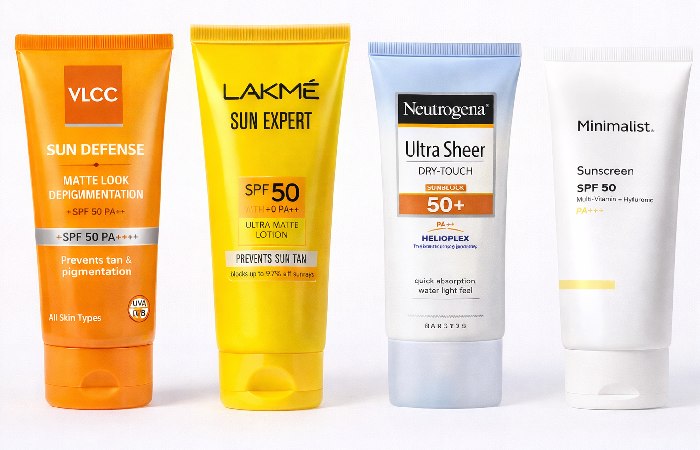
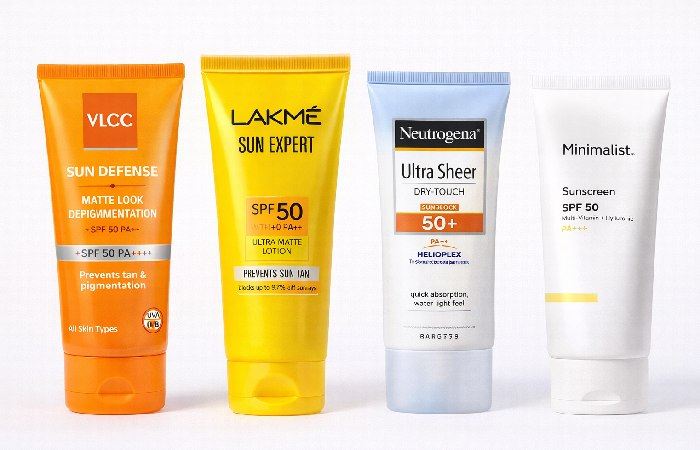
Side-by-side comparison of popular SPF 50 sunscreens available in India.
Here’s how VLCC stacks up against some commonly considered alternatives in India (details may vary slightly by exact SKU and date, so always check the pack):
| Product |
Approx. price band (India) |
SPF/PA (typical) |
Finish / feel |
Best for |
Water resistant? |
| VLCC De-Tan SPF 50 |
~₹350–₹450 after discounts |
SPF 50 PA+++ |
Gel‑cream, semi‑matte on oily skin |
Oily/combination, daily commute |
No official claim |
| Lakme Sun Expert SPF 50 |
~₹350–₹425 (often discounted) |
SPF 50 PA+++ |
Creamy, semi‑matte |
Normal/combination needing more comfort |
Usually no sports claim |
| Neutrogena Ultra Sheer |
~₹550–₹650 at MRP, less on sale |
Often SPF 50+ PA+++/++++ |
Lightweight, smooth |
Outdoor use, some water resistance needed |
Yes on some variants |
| Re’equil Ultra Matte |
~₹449–₹525 |
SPF 50 PA++++ |
Very matte, silicone‑like |
Very oily/acne‑prone, makeup base |
Generally not water‑resistant |
| Minimalist SPF 50 |
~₹399–₹449 |
SPF 50 PA++++ |
Natural, non‑greasy finish |
Sensitive and fragrance‑free preference |
Typically not water‑resistant |
VLCC wins on: affordability vs many imported options, accessible availability, and comfortable finish on oily to combination skin for daily use.
VLCC loses on: lack of water‑resistance, less sensitive‑skin‑friendly profile due to fragrance, and somewhat less sophisticated filter combinations compared with some newer PA++++ sunscreens.
How to Use VLCC SPF 50 Correctly
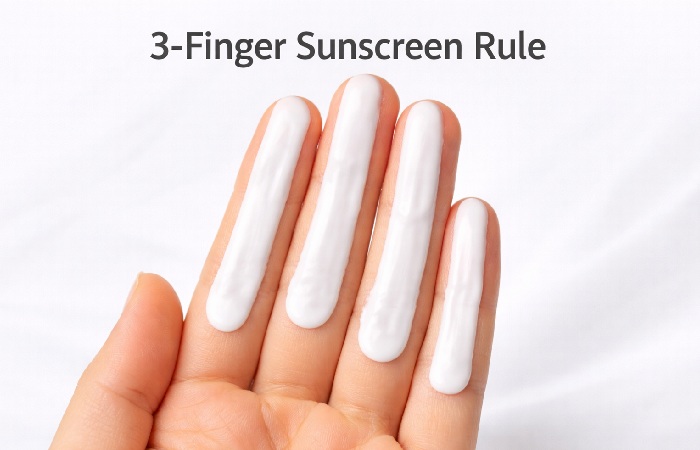
Dermatologists recommend using about three finger-lengths of sunscreen for face and neck.
Proper application matters more than chasing the perfect SPF number. Both the AAD and WHO stress applying enough sunscreen and reapplying regularly.
The 3-Finger Rule
Dermatology guidance commonly uses the idea of 2 mg of sunscreen per cm² of skin, which roughly translates for face and neck to:
-
Squeeze a line of sunscreen along three fingers (index, middle, ring).
-
Apply about half to your face and the rest to neck and exposed parts of the ears.
-
Gently spread and pat until absorbed; don’t rub it all off with a towel or tissue.
Reapplication Schedule
Health authorities recommend reapplying broad‑spectrum sunscreen:
-
At least every 2 hours during continuous sun exposure.
-
More often after heavy sweating, swimming, or towel‑drying, especially with non‑water‑resistant formulas like this one.
Remember: sunscreen is part of a full sun‑safety plan, which should also include shade, protective clothing, hats, and sunglasses.
Application Tips
-
Before makeup: Finish skincare, apply VLCC sunscreen generously, wait 2–3 minutes until it sets, then go in with primer and foundation.
-
For dry skin: Use a hydrating serum and/or moisturizer first; let it sink in, then apply the sunscreen to avoid tightness.
-
For oily skin: You may be able to skip heavy moisturizers in humid weather and use a hydrating toner or light serum plus this sunscreen to keep layers light.
Who Should Buy VLCC SPF 50?
Ideal Candidates
VLCC De‑Tan SPF 50 is a good fit if:
-
You have oily or combination skin and want a sunscreen that does not feel extra greasy.
-
You need daily indoor‑outdoor protection for office, college, or errands rather than hardcore trekking or sports.
-
You wear makeup and want a moderately matte, non‑sticky base.
-
You’re budget‑conscious and looking for something cheaper than many imported or derm‑clinic brands.
-
You live in a hot, humid climate and dislike heavy cream sunscreens.
Who Should Skip This
You might want to look elsewhere if:
-
Your skin is dry or very dry and you prefer richer, more moisturizing sunscreens.
-
You have highly sensitive, rosacea‑prone, or allergy‑prone skin and react easily to fragrance or chemical filters.
-
You need strong water resistance for swimming, sports, or long outdoor work under harsh sun.
-
You specifically want a fully mineral sunscreen (zinc/titanium only) for personal or environmental reasons.
Alternatives like Minimalist SPF 50 (fragrance‑free), Re’equil Ultra Matte (high PA and matte), or Neutrogena Ultra Sheer and La Roche‑Posay Anthelios for heavy outdoor use may serve those niches better.
Frequently Asked Questions
Does VLCC sunscreen remove tan?
No. Sunscreen does not remove an existing tan; it mainly prevents further UV damage and helps slow down additional pigmentation. To reduce existing tan, you typically need a combination of gentle exfoliants (like AHAs/BHAs), brightening agents (like vitamin C), consistent sun protection, and in some cases in‑clinic treatments such as chemical peels guided by a dermatologist.
Is it safe for daily use?
For most healthy adults, this sunscreen is suitable for daily use when applied correctly and removed with a proper cleanser at night. Leading medical organizations encourage daily use of a broad‑spectrum sunscreen of at least SPF 30 on exposed skin, along with other protective measures, to reduce long‑term UV damage and skin‑cancer risk.
Can I use it on my body?
You technically can apply it to your arms, neck, and other exposed areas, but the tube size and price make full‑body application less economical, especially if you are reapplying as recommended. For regular body use, larger‑format body sunscreens from brands like Lotus, Nivea, or other mass‑market options might be more cost‑effective.
Does it work for Indian skin tones?
Yes, the largely chemical‑filter base plus light gel‑cream texture helps it blend into most Indian skin tones without a strong, chalky cast when properly applied. Some initial lightness may appear but usually settles as the product absorbs.
How long does one tube last?
How long a tube lasts depends on how generously you apply it and how often you reapply. If you are using the recommended amount for face and neck daily and reapplying during prolonged sun exposure, expect to go through a typical 100–110 g pack in a few weeks; using it more sparingly or only once per day will stretch it further, but at the cost of some protection.
Is VLCC better than Lakme or Lotus?
“Better” depends on your skin type and lifestyle. VLCC often feels lighter and more matte on oily skin compared to some thicker creams, and can be cheaper than some competitors during sales. Lakme and Lotus offer their own strengths, such as different textures, water‑resistance on certain products, and different filter systems, so it’s helpful to match each product to your specific needs (dryness, sensitivity, outdoor time, budget).
Final Verdict
VLCC De‑Tan SPF 50 PA+++ Sunscreen is a practical, budget‑friendly everyday choice for oily and combination skin types in India who want a relatively light, non‑greasy sunscreen that sits well under makeup and does not leave a harsh white cast. It offers broad‑spectrum protection in line with what dermatology groups recommend for daily use when applied correctly and used alongside other protective steps like shade and clothing.
However, it is less suited to very dry or highly sensitive skin, and it is not designed as a water‑resistant sports or beach sunscreen, so those needing “bulletproof” outdoor protection will be better served by more robust, often pricier formulas.
Our rating (for daily, oily‑skin use in India):
-
Value for money: 8.5/10 (good pricing vs many competitors, especially on sale)
-
Texture & finish: 8/10 (comfortable on oily/combination, less ideal on dry)
-
Sun protection: 7.5/10 (solid for everyday use when applied in correct quantity and reapplied)
-
Skin compatibility: 6.5/10 (good for oily/combination, mixed for dry/sensitive)
Recommendation:
-
If you have oily or combination skin and want an affordable everyday sunscreen for commuting and office life: it’s worth trying.
-
If you have dry, very sensitive, or heavily sun‑exposed outdoor skin needs: consider fragrance‑free or more water‑resistant alternatives.
Author Bio
Healthbloomin content is written to be practical and easy to understand across topics like health, technology, business, marketing, and lifestyle. Articles are based mainly on reputable, publicly available information, with AI tools used only to help research, organise, and explain topics more clearly so the focus stays on real‑world usefulness rather than jargon or unnecessary complexity.
Disclaimer
This review is for informational and educational purposes only and does not constitute medical advice, diagnosis, or treatment. Sunscreen performance and skin reactions vary from person to person; always patch‑test new products and consult a qualified dermatologist or healthcare professional for personalized recommendations, especially if you have sensitive skin, existing skin conditions, or are using prescription treatments. Product formulations, prices, and availability may change over time, so always check the current packaging and retailer information before purchase.