Most articles about how to remove dark circles hand you the same recycled list — sleep more, use cucumber, drink water — and send you on your way.
The problem? That advice ignores the single most important fact about dark circles: not all dark circles are the same. And treating the wrong type with the wrong remedy is exactly why so many people feel stuck, frustrated, and convinced nothing will ever work.
This guide is different. You’ll learn to identify your type of dark circles first, then apply the remedies, ingredients, and treatments that are actually matched to your specific cause. No guesswork. No wasted products.
How to Use This Guide (Read This First)
This article is for general information and does not replace a consultation with a dermatologist or doctor.
Use it in three steps:
-
First, identify your main dark circle type using the simple tests below.
-
Next, match your type to the home remedies and skincare ingredients that actually target that underlying mechanism.
-
Finally, decide if and when it makes sense to talk to a professional about clinical treatments.
This guide is for people who want realistic, steady improvement—not instant ‘miracle cure’ promises.
What Dark Circles Are
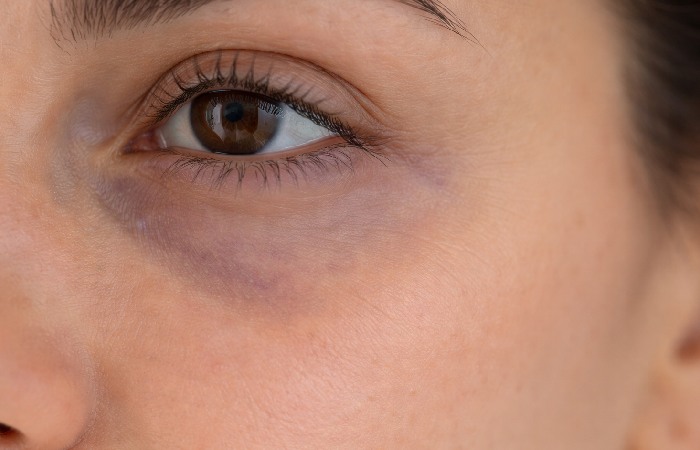
Vascular dark circles appear bluish or purplish due to visible blood vessels beneath thin under-eye skin.
Dark circles are areas of darker colour or shadow under the eyes caused by extra pigment in the skin, visible blood vessels beneath it, or hollows that cast a shadow. This is consistent with how Cleveland Clinic describes dark circles under the eyes.
Type 1: Vascular (Bluish or Purplish Hue)
This is the most common type, especially in younger people and those with fair or medium skin.
The discoloration comes from blood vessels beneath the thin, translucent skin of the under-eye area. When these vessels dilate — due to lack of sleep, allergies, screen fatigue, or fluid pooling — they become more visible through the skin, creating a bluish or purplish shadow.
Cold compresses, caffeine-based eye products, and improved sleep quality all directly target this type.
Type 2: Pigmented (Brownish or Greyish Hue)
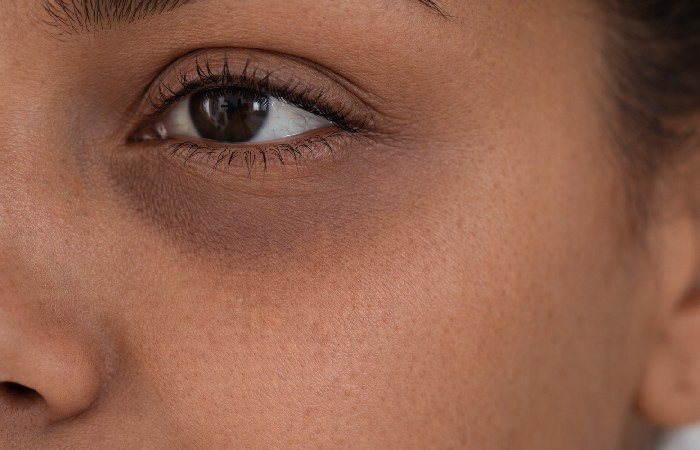
Pigmented dark circles are caused by excess melanin in the under-eye skin and appear brown or grey.
This type is particularly prevalent among South Asian, Southeast Asian, Middle Eastern, and African skin tones — making it the dominant dark circle type for a significant portion of India and global markets.
The cause is an excess deposit of melanin in the under-eye skin. This can be triggered by sun exposure, post-inflammatory hyperpigmentation, genetics, or chronic rubbing of the eyes. The discoloration looks brown, khaki, or grey — not bluish.
Vitamin C, niacinamide, kojic acid, retinol, and broad-spectrum SPF are the tools of choice here. Cold compresses do almost nothing for pigmented dark circles because the problem is in the skin itself, not the blood vessels beneath it.
Type 3: Structural (Shadowing from Volume Loss or Skin Laxity)

Structural dark circles are caused by volume loss and shadowing rather than pigmentation or visible vessels.
This type becomes more common with age. As fat pads under the eye shift, collagen depletes, and the skin loses elasticity, a hollow or “tear trough” depression forms between the lower eyelid and the cheek. The shadow cast by this hollow creates the appearance of dark circles — even when no true pigmentation or vascular issue exists.
No cream in the world fills a tear trough. Structural dark circles respond to dermal fillers, collagen-stimulating treatments, or surgical correction. Lifestyle changes and serums have very limited effect here.
Why Your Dark Circles Are Not Going Away (The Real Reason)
Before any remedy can work, you need to understand what you’re actually dealing with.
Dark circles form through several distinct biological mechanisms. Collapsing them all into one problem — and applying one generic solution — is the core reason most people see little to no improvement after months of trying.
Dermatologists generally classify dark circles into three primary types, each with a different root cause and therefore a different optimal treatment path.
How to Identify Your Type Before You Try Anything
Here is a simple self-assessment you can do at home.
- The stretch test: Gently stretch the skin under your eye with two fingers. If the discoloration lightens or disappears when stretched, the cause is vascular or structural (the shadow flattens out). If it stays the same color or darkens, the cause is melanin-based pigmentation.
- The light test: Check your under-eye color in natural daylight. Bluish or purplish tones indicate vascular. Brown or greyish tones indicate pigmentation. A hollow or concave appearance indicates structural.
- The history test: Did your dark circles appear gradually with age? Likely structural. Have they been present since childhood and run in your family? Likely genetic pigmentation. Do they look worse after poor sleep or allergies? Likely vascular.
Many people have a combination of two types — the most common being vascular + pigmented, especially in Indian and South Asian skin.
How to Remove Dark Circles: Home Remedies Matched to Type
Generic home remedy lists fail because they treat all dark circles the same. Below, remedies are matched to the types they actually address.
For Vascular Dark Circles (Bluish/Purple)

Cold compresses temporarily constrict blood vessels, reducing the appearance of vascular dark circles.
- Cold compress: Apply a cold, damp cloth or chilled spoons to the under-eye area for 10 minutes each morning. Cold constricts blood vessels, reducing their visibility through the skin. This is one of the most immediate, evidence-consistent remedies for vascular dark circles. Cucumber slices work on the same principle — the cooling effect, not any special ingredient.
- Chilled green or black tea bags: After steeping and cooling, place used tea bags over your eyes for 10–15 minutes. The caffeine in tea has a mild vasoconstrictive effect and the tannins may reduce puffiness. Best used consistently, not as a one-time fix.
- Elevated sleep position: Sleeping flat allows fluid to pool under the eyes overnight. Use an extra pillow to keep your head slightly elevated. This reduces morning puffiness and vascular congestion, particularly noticeable in the first 30 minutes after waking.
- Allergy management: Chronic allergies cause histamine release, which dilates blood vessels and triggers rubbing — both worsening vascular dark circles. If your dark circles are worse during allergy seasons, treating the allergy can reduce the circles significantly. Our guide on home remedies for seasonal allergies covers natural first-line options worth trying alongside antihistamines.
For Pigmented Dark Circles (Brownish/Grey)
- Vitamin C: Applied topically, Vitamin C inhibits the enzyme tyrosinase, which is involved in melanin production. It also provides antioxidant protection against UV-triggered pigmentation. Consistent daily use over 8–12 weeks is needed before visible brightening occurs. Look for stabilized forms like L-ascorbic acid, ascorbyl glucoside, or sodium ascorbyl phosphate.
- SPF — every single day: UV exposure is one of the primary drivers of under-eye pigmentation. Wearing broad-spectrum SPF 30 or higher on the under-eye area (yes, even on cloudy days) is not optional if you’re treating pigmented dark circles. If you’re unsure which formula suits Indian skin, see our Dr. Sheth sunscreen review for a dermatologist-recommended option.. Skipping sunscreen while using brightening actives is counterproductive.
- Rose water: A traditional remedy with mild anti-inflammatory properties. Rose water won’t dramatically fade pigmentation, but it soothes irritation and reduces puffiness when used as a cold compress. It’s a supportive, low-risk addition — not a standalone treatment.
- Almond oil with Vitamin E (overnight use): Some evidence suggests that the emollient properties of sweet almond oil, combined with the antioxidant action of Vitamin E, may mildly support skin barrier function under the eyes. Results are modest and gradual. Best treated as a supportive moisturizing step rather than a primary brightening agent.
- Potato juice or raw potato slices: Raw potato contains catecholase, an enzyme traditionally associated with mild skin-lightening properties. While high-quality clinical evidence specifically on under-eye pigmentation is limited, this is a low-risk traditional remedy. Apply chilled raw potato slices for 10–15 minutes and rinse clean.
- Turmeric paste (with caution): Curcumin, the active compound in turmeric, has documented anti-inflammatory and mild melanin-inhibiting properties. Mix a small amount of turmeric with rose water or raw milk and apply carefully — avoiding direct eye contact. Rinse completely. Note: turmeric can temporarily stain the skin yellow; use sparingly and ensure full removal.
Similarly for Structural Dark Circles (Hollow/Shadow)
Home remedies have very limited effectiveness for structural dark circles. Keeping the skin well-hydrated (with hyaluronic acid-based moisturizers) can plump the skin slightly and reduce the shadow’s appearance temporarily. Adequate hydration and nutrition support collagen production but won’t reverse established volume loss.
The most meaningful improvement for structural dark circles comes from clinical treatment — specifically hyaluronic acid tear trough fillers, which should only be performed by a trained, qualified practitioner.
Skincare Ingredients That Actually Work for Dark Circles
When choosing an eye cream or serum, ingredient selection should be driven by your dark circle type. Here is a practical reference:
| Ingredient |
Best For |
Mechanism |
Realistic Timeline |
| Vitamin C |
Pigmented |
Tyrosinase inhibition, antioxidant |
8–12 weeks |
| Retinol / Retinal |
Pigmented + Aging |
Collagen stimulation, cell turnover |
12–16 weeks |
| Caffeine |
Vascular |
Vasoconstriction, reduces puffiness |
Immediate (temporary) |
| Niacinamide |
Pigmented |
Melanosome transfer inhibition |
8–12 weeks |
| Hyaluronic Acid |
Structural (partial) |
Hydration, temporary plumping |
Immediate |
| Peptides |
Structural + Aging |
Collagen synthesis support |
12+ weeks |
| Vitamin K |
Vascular |
Supports coagulation, reduces bruising-like discoloration |
8–12 weeks (evidence moderate) |
| Kojic Acid |
Pigmented |
Melanin inhibition |
8–12 weeks |
| Azelaic Acid |
Pigmented |
Melanin inhibition, anti-inflammatory |
8–12 weeks |
One important note on retinol under the eyes: The under-eye skin is among the thinnest on the body. Start with a very low concentration (0.025–0.05%) and apply only every 2–3 nights initially to avoid irritation, dryness, and sensitivity. An irritated under-eye area can worsen the appearance of dark circles temporarily.
Lifestyle Changes That Support Long-Term Improvement
These are not filler advice points — they are genuine co-factors in dark circle formation that undermine even the best topical routine if left unaddressed.
- Sleep quality and duration: Sleep deprivation causes cortisol elevation, which promotes fluid retention and vascular dilation. Most adults need 7–9 hours. The quality of sleep matters as much as quantity — fragmented sleep produces similar effects to insufficient sleep. Improving sleep is the single highest-leverage lifestyle intervention for vascular dark circles.
- Hydration: Dehydration causes the skin to look dull and sunken, making structural and vascular dark circles more pronounced. Consistent water intake (approximately 2–3 liters daily for most adults, adjusted for body weight and activity) supports skin turgor and texture.
- Dietary factors: Iron deficiency anemia causes pallor and can make the under-eye vascular network more visible. If your dark circles are accompanied by general fatigue, pale skin, and low energy, it’s worth having your iron levels checked. Foods rich in Vitamin C, Vitamin K, and antioxidants support skin health broadly — for a full breakdown of what to eat, see our dedicated guide on best foods for skin health. Diets high in salt promote fluid retention and morning puffiness.
- Screen time and eye strain: Extended screen use increases eye fatigue, causes eye rubbing, and may worsen vascular congestion. Following the 20-20-20 rule (every 20 minutes, look 20 feet away for 20 seconds) and using blue-light filtering settings reduces cumulative strain.
- Reducing eye rubbing: Chronic rubbing causes micro-trauma and post-inflammatory hyperpigmentation — a direct driver of pigmented dark circles, particularly in South Asian and darker skin tones. If allergies are driving the rubbing, treat the allergy.
When to See a Doctor or Dermatologist
See a doctor or dermatologist promptly if you notice:
-
Dark circles appearing suddenly or getting worse very quickly.
-
Darkening under only one eye.
-
Dark circles with other symptoms like pain, swelling, vision changes, severe fatigue, or unexplained weight changes.
-
Very dark skin tone and you’re considering peels or lasers.
-
No improvement at all after several months of consistent sleep, skincare, and sun protection.
Clinical Treatments for Dark Circles: When Home Remedies Aren’t Enough
All of the options below should be discussed with a qualified dermatologist or plastic/oculoplastic surgeon, who can assess your skin, advise if you’re a good candidate, and choose safe settings and protocols for your case. If home remedies and a well-formulated skincare routine haven’t produced meaningful results after 3–4 months, clinical options are worth considering, as outlined by Healthline.
Chemical Peels
Superficial to medium-depth chemical peels accelerate skin cell turnover and can meaningfully reduce epidermal pigmentation. For a detailed look at how peel-based treatments work on melanin-related skin concerns, read our guide on the Cosmelan peel for pigmentation. Particularly effective for pigmented dark circles. Not appropriate for all skin tones — deeper peels carry PIH risk on darker skin and should be approached cautiously.
Suitability and peel strength should always be decided by a dermatologist after examining your skin type and pigmentation risk.
Laser Treatments
Fractional lasers and Q-switched Nd:YAG lasers target melanin deposits and can significantly improve pigmented dark circles. Results are not instantaneous and typically require multiple sessions. Requires expert operator selection — incorrect settings on darker skin tones can worsen pigmentation.
For broader under-eye and vision health concerns, our overview of red light therapy for eyes covers an emerging non-invasive option gaining attention in eye wellness.
“Choice of device and settings should be made by an experienced doctor, especially for darker skin tones, to minimise the risk of burns or worsening pigmentation.”
Platelet-Rich Plasma (PRP)
PRP involves drawing a small amount of the patient’s own blood, concentrating the growth factors, and injecting them under the eye. Evidence suggests it may support collagen production and improve skin quality in the under-eye area. Results are gradual and vary by individual. Generally considered low-risk given autologous sourcing.
“Your practitioner can explain realistic outcomes, number of sessions needed, and whether PRP is appropriate for your specific concerns.”
Dermal Fillers (Tear Trough Filler)

Hyaluronic acid fillers restore lost volume in the tear trough to reduce structural shadowing.
Hyaluronic acid fillers injected into the tear trough area address structural dark circles by restoring volume and reducing the shadow. Results are immediate and can last 12–18 months. This is a procedure with meaningful risks if performed by an unqualified injector — including vascular occlusion and the Tyndall effect (bluish discoloration from superficial filler placement). Choose a board-certified dermatologist or plastic surgeon.
“Only seek tear trough fillers from a qualified injector who regularly performs this procedure and can discuss risks and alternatives in detail.”
Blepharoplasty
A surgical option for significant structural dark circles driven by excess skin, fat herniation, or severe volume loss. A last resort for most patients, but highly effective when the root cause is anatomical and unresponsive to non-surgical treatment.
“Blepharoplasty should only be considered after a thorough surgical consultation and clear understanding of risks, recovery, and realistic outcomes.”
Ayurvedic and Traditional Remedies: What Science Supports
For readers interested in traditional and Ayurvedic approaches — especially relevant for the Indian audience — here is an honest assessment of commonly recommended remedies:
- Kumkumadi Tailam: A traditional Ayurvedic formulation containing saffron, sandalwood, and various botanical oils. Saffron (safranal and crocin) has some preliminary evidence for antioxidant and mild skin-brightening properties. Well-tolerated by most skin types. Evidence for under-eye pigmentation specifically is limited but it is a low-risk option as part of a broader routine.
- Triphala: Used internally and externally. As an oral supplement, triphala’s antioxidant properties may support overall skin health. Applied as a cold-water compress, it has mild anti-inflammatory properties. Not a frontline dark circle treatment but a supportive one.
- Rose water: Covered above — well-tolerated, mildly soothing, best used as a cooling compress rather than a pigmentation treatment.
- Bhringaraj oil: Traditionally used to support eye health and reduce puffiness. Evidence for under-eye pigmentation is largely anecdotal. Low risk when applied carefully to the periorbital area.
The honest assessment: Ayurvedic remedies work best as supportive measures alongside, not instead of, evidence-backed topical actives (Vitamin C, niacinamide, SPF). They are not replacements for a structured skincare routine or clinical treatment where needed.
High‑quality clinical studies on these traditional remedies for dark circles specifically are still limited. Treat them as supportive options alongside evidence‑based skincare and medical treatments, not as stand‑alone replacements for proven therapies.”
Realistic Expectations: What to Expect and When
All timelines below are approximate and vary by person, but this framework helps you choose the right level of treatment.
Use the table above to decide which level of treatment best matches your current severity, budget, and willingness for in‑clinic procedures.
At‑a‑Glance: Treatment Levels for Dark Circles
| Level / Option |
Best For |
What It Targets |
Timeline Range (Approx.) |
Cost Level |
Key Risks / Limitations |
| Lifestyle changes |
Mild tired look, vascular circles |
Sleep, stress, fluid retention |
1–4 weeks |
Low |
Limited effect on deep pigment or hollows |
| Home remedies |
Puffiness, mild vascular/pigment |
Cooling, mild anti‑inflammatory |
Minutes to several weeks |
Low |
Mostly temporary, evidence often limited |
| OTC eye skincare |
Mild–moderate pigment/aging |
Pigment, texture, hydration |
8–12+ weeks |
Low–Med |
Needs consistency; not enough for severe cases |
| Prescription creams/peels |
Pigmented circles |
Melanin production, cell turnover |
Weeks to months |
Med |
Irritation, PIH risk; must be medically guided |
| Lasers/light devices |
Pigment or vascular components |
Melanin or vessels |
Several sessions over months |
Med–High |
Cost, downtime, pigment risks esp. darker skin |
| Fillers/surgery |
Structural hollows, excess skin/fat |
Volume loss, anatomy |
Immediate to months |
High |
Procedural risks; needs expert operator |
Knowing what to expect and when makes it much easier to stay consistent with your routine.
- Weeks 1–2: Home remedies like cold compresses and elevated sleep position can show immediate, temporary improvement in vascular dark circles. No significant change from topical actives — they haven’t had time to work.
- Weeks 4–6: Consistent use of Vitamin C or niacinamide may show the first subtle brightening. Skin texture under the eye may improve. Lifestyle changes (sleep, hydration, SPF) begin compounding.
- Weeks 8–12: Meaningful visible improvement for pigmented dark circles with a consistent topical routine. Vascular dark circles are well-controlled with lifestyle and cold therapy by this point if addressed consistently.
- Months 3–6: Retinol-based improvements in skin thickness and texture become visible for structural + aging-related dark circles. This is the realistic horizon for seeing substantive results from any non-clinical intervention.
A dermatology review on PubMed notes that infra‑orbital dark circles can result from pigment, thin skin, visible vessels, or structural changes, so treatment has to match the underlying cause rather than rely on a single remedy.
What will NOT work on this timeline:
- Structural dark circles responding to eye cream alone — this does not happen meaningfully within 6 months
- Genetically driven deep pigmentation resolving without clinical intervention
- Any remedy applied inconsistently or for fewer than 8 weeks
Common Mistakes to Avoid
- Using remedies for the wrong type: Applying cold compresses daily for brownish pigmented dark circles does very little — the problem is in the skin cells, not the blood vessels. Type identification comes first.
- Buying eye creams based on marketing, not ingredients: “Advanced,” “brightening,” and “youth-activating” language on packaging tells you nothing. Read the ingredient list. If Vitamin C, niacinamide, caffeine, retinol, or peptides aren’t in the first several ingredients, the product is unlikely to deliver meaningful results.
- Skipping SPF while using brightening actives: Vitamin C, niacinamide, and kojic acid work to reduce melanin production — but UV exposure triggers melanin production simultaneously. Skipping SPF while using these actives is like bailing water from a boat without plugging the hole.
- Expecting overnight results and quitting too soon: Skin cell turnover takes approximately 28–40 days (longer with age). No topical active can produce dramatic results in one or two weeks. The minimum evaluation window for any skincare intervention is 8–12 weeks of consistent use.
- Rubbing products in aggressively: The under-eye skin is extremely thin. Aggressive rubbing during product application causes micro-trauma and worsens both pigmentation and puffiness. Use your ring finger (the weakest) and apply with the gentlest possible patting motion.
- Treating dark circles as a single problem: This is the foundational mistake. If you haven’t identified your type, you’re guessing — and most guesses are wrong.
Who This Guide Is For
This guide is designed for:
- Adults of any age experiencing dark circles, particularly those who have tried generic remedies without success
- South Asian, Indian, and darker skin tone individuals dealing with pigmented under-eye discoloration
- People in the awareness-to-consideration stage: you know the problem, you want a structured, realistic solution
- Anyone evaluating whether to invest in clinical treatment or continue with a home routine first
Who Should Consult a Professional Before Acting
- Individuals with very dark skin tones considering laser or chemical peel treatments — professional assessment of skin type is essential to avoid worsening pigmentation
- Anyone whose dark circles appeared suddenly (rather than gradually) alongside other symptoms — sudden periorbital darkening can occasionally signal systemic conditions including thyroid dysfunction or iron deficiency anemia
- Patients on medications known to affect skin pigmentation or photosensitivity
- Anyone considering dermal fillers or surgical options — a qualified dermatologist or plastic surgeon consultation is non-negotiable
Final Verdict: How to Remove Dark Circles That Actually Last
Dark circles can often be improved significantly — especially when treatment is matched to the underlying cause.
If your dark circles are vascular, prioritize cold therapy, sleep quality, allergy management, and caffeine-based eye products.
If they are pigmented, build a consistent routine around Vitamin C, niacinamide, SPF, and — when ready — retinol. Expect 8–12 weeks minimum.
If they are structural, no home remedy or eye cream will give you meaningful results. A consultation with a dermatologist about tear trough fillers or collagen-stimulating treatments is your most direct path forward.
For most people, the answer lies in a combination: address lifestyle factors first, build a type-matched topical routine second, and consider clinical options only if consistent effort over 3–4 months hasn’t moved the needle.
How to remove dark circles permanently — or as close to it as possible — is not about finding the right single remedy. It’s about understanding the mechanism, being consistent, and being patient.
FAQ’s
Q1: How do I remove dark circles permanently?
Permanent removal depends on the cause. Pigmented dark circles can see long-term improvement with consistent use of Vitamin C, niacinamide, SPF, and in some cases laser or chemical peels. Vascular dark circles improve significantly with lifestyle changes but may recur with poor sleep or allergies. Structural dark circles caused by volume loss require clinical treatment like fillers for lasting results. No single home remedy produces permanent removal for all types.
Q2: How can I remove dark circles fast — in 1 or 2 days?
Fast, temporary improvement is possible for vascular dark circles: apply a cold compress or chilled tea bags for 10–15 minutes, sleep with your head elevated, and reduce salt intake the day prior. These reduce puffiness and vascular congestion visibly. For pigmented or structural dark circles, no method produces meaningful change in 1–2 days — any significant improvement requires weeks of consistent effort.
Q3: Which vitamin deficiency causes dark circles?
The most commonly associated deficiency is iron deficiency anemia, which causes pallor and makes under-eye blood vessels more visible. Vitamin K deficiency has also been linked to vascular dark circles, as it plays a role in blood coagulation. Vitamin C deficiency weakens capillaries and may worsen under-eye bruising-like discoloration. If dark circles are accompanied by fatigue or general paleness, a blood panel checking iron and vitamin levels is advisable.
Q4: Are dark circles genetic and can they still be treated?
Yes, dark circles can have a strong genetic component — particularly pigmented dark circles in South Asian and darker skin tones, and structural dark circles driven by inherited facial anatomy. Genetic predisposition means treatment may be more challenging and require ongoing maintenance rather than a one-time fix. However, meaningful improvement is still achievable with type-matched topical routines, clinical treatments, and lifestyle optimization.
Q5: What is the most effective eye cream ingredient for dark circles?
There is no single best ingredient — the optimal choice depends on the dark circle type. Caffeine is most effective for vascular/puffy dark circles (acts quickly but temporarily). Vitamin C and niacinamide are most effective for pigmented dark circles (improve gradually over 8–12 weeks). Peptides and retinol are most effective for structural/aging-related dark circles. An eye cream combining caffeine + niacinamide + peptides covers the broadest range of types.
Q6: At what age do dark circles typically start and can children have them?
Dark circles can appear at any age. In children and young adults, vascular dark circles are most common — often driven by allergies, screen time, or genetics. Pigmented dark circles can also begin early and worsen with sun exposure. Structural dark circles become more common after the mid-thirties as collagen and facial fat volume decline naturally. In children, persistent dark circles alongside congestion or itchy eyes often signal untreated nasal allergies.
Citations & Methodology
This guide was created by reviewing current guidance from major medical providers, dermatologist‑written articles, and peer‑reviewed reviews on infra‑orbital dark circles, then combining that research with a structured synthesis of the information into a practical, type‑based roadmap.
About Healthbloomin Content
Healthbloomin articles are written to be practical and easy to understand across topics like health, technology, business, marketing, and lifestyle. Content is based mainly on reputable, publicly available information, with AI tools used to help research, organise, and clarify complex topics so the focus stays on real‑world usefulness instead of jargon.
Medical Disclaimer
This guide is for general information only and is not a substitute for professional medical advice, diagnosis, or treatment. Always talk to a qualified healthcare provider with any questions about your skin, medications, or treatment options, and never ignore or delay medical advice because of something you read online.