Every surface your gym members touch — from free weights to locker-room door handles — can harbor bacteria, fungi, and viruses. Research has found that free weights can carry up to 362 times more bacteria than a toilet seat.
That’s not a scare tactic. It’s a reality that makes fitness center cleaning services one of the most important investments a gym owner can make.
This guide breaks down exactly what professional fitness center cleaning services include, what they cost, and how to choose the right provider. Whether you run a single boutique studio or manage a multi-location franchise, you’ll walk away with a cleaning frequency matrix, a provider evaluation checklist, and the confidence to make the right decision for your members and your business.
This guide is for: gym owners, fitness center managers, health club operators, franchise brand operators, and boutique studio owners.
Fitness Center Cleaning Services at a Glance
- What are they? → Professional sanitization covering equipment, locker rooms, floors, high-touch surfaces, and HVAC systems
- Why do they matter? → Prevent illness, boost member retention, protect equipment, and maintain health-code compliance
- How much do they cost? → Typically $0.10–$0.30 per square foot or $500–$2,000 per month depending on size and frequency
- How to choose a provider → Look for EPA-registered products, flexible scheduling, gym-specific experience, and documented protocols
- Key cleaning areas → Workout equipment, locker rooms, restrooms, floors/mats, high-touch surfaces, and HVAC systems
What Are Fitness Center Cleaning Services?
Fitness center cleaning services are professional sanitization and janitorial solutions designed specifically for gyms, health clubs, and workout studios. These services cover equipment disinfection, locker room cleaning, floor care, air quality management, and high-touch surface sanitization using EPA-registered products.
Unlike standard commercial cleaning, fitness center cleaning accounts for the unique challenges of gym environments — heavy foot traffic, constant sweat exposure, shared equipment, and areas like showers and saunas where moisture accelerates bacterial growth.
Daily Cleaning vs. Deep Cleaning
Understanding the difference between these two service types is critical before hiring a provider.
Daily cleaning focuses on maintaining baseline hygiene. This includes wiping down equipment after operating hours, mopping floors, sanitizing restrooms, and disinfecting high-touch surfaces like door handles and reception counters.
Deep cleaning is a more intensive, periodic service. It targets areas that daily cleaning misses — scrubbing tile grout in showers, descaling fixtures, extracting carpet in lobbies, cleaning HVAC filters, and using hospital-grade disinfectants on all surfaces with proper dwell time.
Most fitness centers benefit from daily surface cleaning combined with weekly or bi-weekly deep cleaning to maintain safe, consistent hygiene standards.
Why Professional Gym Cleaning Is Essential
Health and Safety
Gyms are high-transmission environments. Members share equipment, touch the same surfaces, and produce sweat — all of which create ideal conditions for pathogens like MRSA, Staphylococcus, E. coli, and influenza to spread.
According to CDC’s guidelines on cleaning and disinfecting, high-touch surfaces in public facilities should be cleaned and disinfected regularly using EPA-registered products with adequate dwell time.
Professional cleaning crews are trained to follow proper dwell-time protocols — the time a disinfectant must remain wet on a surface to effectively kill pathogens. This detail is often overlooked by in-house staff using consumer-grade wipes.
Member Retention and Brand Reputation
Here’s a reality many gym owners underestimate: the cost of member churn from poor hygiene almost always exceeds the cost of professional cleaning.
Members notice dirty locker rooms, grimy floors, and equipment with visible residue. A single negative online review mentioning hygiene can deter dozens of potential sign-ups. On the other hand, a consistently clean facility creates a premium experience that drives retention and word-of-mouth referrals.
Regulatory Compliance
Fitness facilities are subject to local health department codes, OSHA workplace safety standards, and state-level sanitation regulations. Non-compliance can result in fines, temporary closures, or liability in the event of a member illness.
Professional cleaning providers typically document every cleaning session — including products used, areas covered, and staff assigned — creating an audit trail that protects your business during inspections.
Key Areas That Need Regular Cleaning
Not all gym zones carry the same risk. The table below prioritizes cleaning intensity by area.
| Zone |
Risk Level |
Cleaning Frequency |
Key Concern |
| Workout equipment |
High |
After each use + daily deep-wipe |
Sweat, bacteria, skin oils |
| Locker rooms & showers |
High |
Multiple times daily + weekly deep clean |
Mold, mildew, fungi |
| Restrooms |
High |
Minimum twice daily |
Pathogens, odor control |
| High-touch surfaces |
High |
Multiple times daily |
Cross-contamination |
| Floors & mats |
Medium |
Daily sweep/mop + weekly deep clean |
Dirt, sweat, slip hazards |
| HVAC & air systems |
Medium |
Monthly filter check + quarterly service |
Air quality, odor, allergens |
| Reception & lobby |
Low-Medium |
Daily wipe + weekly detail |
First impressions |
Workout Equipment and Machines
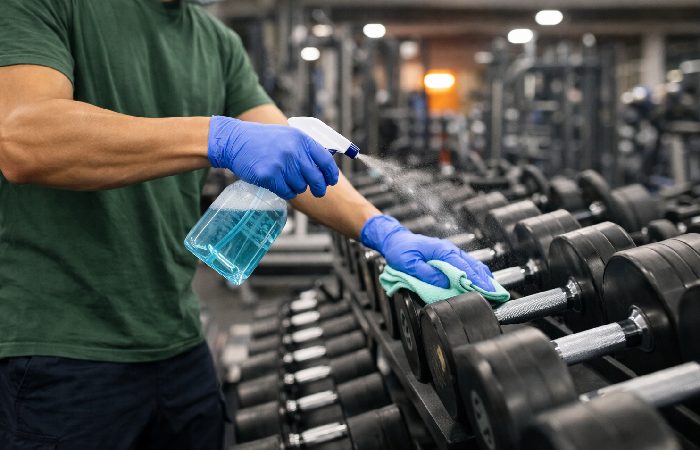
High-touch equipment requires frequent and proper disinfection to prevent bacteria spread
Cardio machines, free weights, benches, resistance machines, and yoga mats are the most frequently touched surfaces in any gym. Professional services use microfiber cloths with EPA-registered disinfectants — not just general-purpose spray — to properly sanitize without damaging equipment coatings.
Important: alcohol-based cleaners can degrade rubber grips and protective coatings on some equipment. Professional providers know which products are safe for each surface type.
Locker Rooms, Restrooms, and Showers
These areas are the number-one breeding ground for mold, mildew, and fungal infections like athlete’s foot. Professional cleaning in these zones includes:
- Tile and grout scrubbing to prevent mold buildup
- Fixture descaling (faucets, showerheads)
- Drain sanitization to eliminate odor and bacteria
- Bench and locker surface disinfection
- Restocking supplies (soap, paper products, sanitizer)
Floors and Mats
Gym floors see hundreds of footsteps daily — tracking in dirt, depositing sweat, and creating slip hazards. Professional services use specialized floor care for different materials:
- Rubber flooring: pH-neutral cleaners that won’t break down the material
- Hardwood (basketball courts, studios): dust mopping followed by appropriate hardwood cleaners
- Carpet (lobbies, offices): regular vacuuming with periodic hot-water extraction
Yoga and exercise mats should be sanitized after every use with a non-toxic, fast-drying disinfectant.
High-Touch Surfaces
These are the surfaces members contact repeatedly throughout their visit:
- Door handles and push bars
- Keypad entry systems
- Water fountain buttons
- Reception counters
- Light switches
- Vending machine buttons
The 80/20 rule applies here — roughly 20% of surfaces in a gym harbor the majority of transferable pathogens. Prioritizing these high-touch points with multiple daily disinfection passes is more effective than treating every surface equally.
HVAC Systems and Air Quality
A gym full of heavy-breathing members generates significant airborne moisture, odors, and potential contaminants. Professional cleaning services often include:
- HVAC filter inspection and replacement (monthly or quarterly)
- Vent and duct cleaning to reduce circulating dust and allergens
- Air quality monitoring to maintain proper ventilation rates
Good air quality isn’t just a comfort issue — it’s a health standard. Members exercising in poorly ventilated spaces are at higher risk of respiratory irritation and airborne illness transmission.
Fitness Center Cleaning Checklist — Daily, Weekly, Monthly
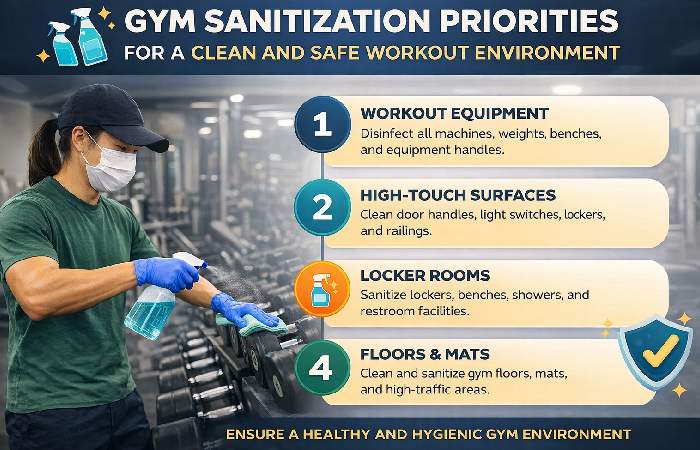
A structured cleaning schedule ensures consistent hygiene and compliance in fitness centers
Use this cleaning frequency matrix as a baseline. Adjust based on your gym’s size, traffic, and operating hours.
| Task |
Daily |
Weekly |
Monthly |
Quarterly |
| Wipe down all workout equipment |
✅ |
— |
— |
— |
| Disinfect high-touch surfaces |
✅ (2–3x) |
— |
— |
— |
| Sweep and mop all floors |
✅ |
— |
— |
— |
| Clean and restock restrooms |
✅ (2x+) |
— |
— |
— |
| Clean mirrors and glass |
✅ |
— |
— |
— |
| Empty all trash receptacles |
✅ |
— |
— |
— |
| Deep clean locker rooms and showers |
— |
✅ |
— |
— |
| Scrub tile and grout |
— |
✅ |
— |
— |
| Deep clean carpeted areas |
— |
— |
✅ |
— |
| HVAC filter inspection |
— |
— |
✅ |
— |
| Full duct and vent cleaning |
— |
— |
— |
✅ |
| Floor wax or reseal (if applicable) |
— |
— |
— |
✅ |
| Deep equipment sanitization |
— |
✅ |
— |
— |
| Window cleaning (interior/exterior) |
— |
— |
✅ |
— |
This matrix follows the Fitness Center Cleaning Pyramid — a tiered approach where daily sanitization forms the base, supported by weekly deep cleaning, monthly maintenance, and quarterly overhauls.
How Much Do Fitness Center Cleaning Services Cost?
One of the biggest frustrations gym owners face is the lack of transparent pricing. Here’s what you can realistically expect.
Pricing Models
Professional gym cleaning services typically use one of three pricing structures:
- Per square foot: $0.10–$0.30/sq ft (most common for regular service)
- Hourly rate: $30–$60/hour per cleaning team
- Monthly flat rate: Fixed fee based on scope and frequency
Cost Factors
Several variables influence your final cost:
- Facility size — larger gyms require more time, staff, and product
- Cleaning frequency — daily service costs more monthly but less per-visit than weekly
- Scope of services — deep cleaning typically adds 25–60% to the base rate
- Wet zones — showers, saunas, and pools can increase costs by 25–60%
- Location — urban-area rates tend to run 10–20% higher than suburban
Sample Pricing by Gym Size
| Gym Type |
Size (sq ft) |
Estimated Cost Per Visit |
Estimated Monthly Cost |
| Boutique studio (yoga, pilates) |
1,000–3,000 |
$150–$280 |
$600–$1,200 |
| Mid-size gym |
5,000–10,000 |
$300–$700 |
$1,200–$2,800 |
| Large fitness center |
10,000–25,000 |
$650–$1,400 |
$2,600–$5,600 |
| Multi-location chain (per site) |
15,000+ |
$800–$1,500+ |
$3,200–$6,000+ |
Pro tip: Request quotes from at least three providers. Compare not just price, but what’s included — especially whether deep cleaning, restocking supplies, and emergency cleaning are part of the base rate or billed separately.
How to Choose the Right Fitness Center Cleaning Provider
Key Questions to Ask Before Hiring
Before signing a contract, ask every prospective provider these questions:
- Do you use EPA-registered disinfectants — and which ones?
- Are your staff trained in fitness-specific cleaning protocols?
- Can you provide a documented cleaning log after each visit?
- Do you carry liability insurance and worker’s compensation?
- What is your response time for emergency cleaning (e.g., biohazard, flood)?
- Can you customize a schedule around our operating hours?
- Do you follow EPA’s List N of registered disinfectants for pathogen-specific products?
Red Flags to Watch For
- No written cleaning protocol — if they can’t document their process, they likely don’t have one
- One-size-fits-all pricing — your gym is unique; cookie-cutter packages often miss critical zones
- Consumer-grade products — professional services should use commercial or hospital-grade disinfectants, not household sprays
- No insurance or bonding — this exposes your business to liability
- Reluctance to provide references from other fitness clients
Provider Evaluation Checklist
Use this checklist to compare providers side by side:
- EPA-compliant cleaning products
- Gym/fitness center experience (ask for references)
- Liability insurance and bonding
- Flexible scheduling (early morning, late night, weekends)
- Documented cleaning logs provided after each visit
- Staff background checks and training programs
- Emergency/on-call cleaning capability
- Green/eco-friendly cleaning options available
- Follows cleaning industry standards established by ISSA
- Transparent pricing with no hidden fees
Common Mistakes Gym Owners Make With Cleaning
1. Relying solely on in-house staff.
Front-desk employees and personal trainers are not trained sanitization professionals. They may wipe surfaces, but they rarely follow proper dwell-time protocols or use commercial-grade disinfectants.
2. Skipping the deep-cleaning schedule.
Daily surface cleaning is necessary but insufficient. Without regular deep cleaning — locker room scrubbing, carpet extraction, HVAC maintenance — problems accumulate invisibly until they become expensive emergencies.
3. Using non-EPA-registered products.
Household cleaning sprays aren’t formulated to kill the pathogens found in fitness environments. Always verify that your cleaning provider uses products from the EPA’s List N or equivalent registered disinfectants.
4. Ignoring HVAC and air quality.
Members breathe hard during workouts. If your HVAC system is circulating dust, mold spores, or stale air, you’re creating a respiratory risk — and an unpleasant workout experience.
5. Having no documented cleaning protocol.
Without a written cleaning schedule and log, you have no proof of compliance during health inspections and no accountability for your cleaning provider. Documentation protects your business.
Who Needs Fitness Center Cleaning Services?
Best for:
- Multi-location gym chains needing consistent hygiene standards across sites
- Mid-size gyms (5,000–20,000 sq ft) with high daily member traffic
- 24/7 fitness centers where back-to-back usage demands continuous sanitization
- Boutique studios with premium member expectations (yoga, pilates, cycling)
- Franchise brands where hygiene standards are part of brand compliance
Not for:
- Home gyms or private personal training spaces with fewer than 5 clients per day — in-house cleaning is usually sufficient
- Gyms in the early startup phase with extremely tight budgets that can’t commit to at least weekly professional service (consider hiring for deep cleaning only until revenue allows full service)
Final Verdict
Fitness center cleaning services aren’t a luxury — they’re a baseline operational standard for any gym that values member health, retention, and regulatory compliance.
The most important things to remember:
- Don’t cut corners on cleaning to save money. The cost of a single hygiene-related lawsuit or a wave of membership cancellations far exceeds a monthly cleaning contract.
- Use this guide’s cleaning frequency matrix to establish your baseline schedule.
- Evaluate providers using the checklist — EPA-registered products, gym experience, documented protocols, and transparent pricing should be treated as core requirements.
Your members are trusting you with their health every time they walk through the door. Professional fitness center cleaning services help you honor that trust, consistently.
Frequently Asked Questions
Q: What is included in fitness center cleaning services?
A: Professional fitness center cleaning typically includes equipment disinfection, floor care (sweeping, mopping, specialized treatments), locker room and restroom sanitization, high-touch surface disinfection, mirror and glass cleaning, trash removal, and HVAC filter maintenance. Most providers offer daily surface cleaning alongside weekly or monthly deep-cleaning services.
Q: How often should a gym be professionally cleaned?
A: High-touch surfaces and equipment should be disinfected daily — ideally multiple times per day during peak hours. Deep cleaning of locker rooms, showers, and tile grout should happen weekly. HVAC systems, carpets, and windows are best serviced monthly or quarterly.
Q: How much do gym cleaning services cost?
A: Costs typically range from $0.10 to $0.30 per square foot for regular service. Monthly flat rates range from $600 to $1,200 for boutique studios, $1,200 to $2,800 for mid-size gyms, and $2,600 to $6,000+ for large fitness centers. Pricing depends on facility size, cleaning frequency, and scope of services.
Q: What cleaning products are safe for gym equipment?
A: Look for EPA-registered disinfectants that are effective against common gym pathogens but safe for equipment surfaces. Avoid alcohol-based cleaners on rubber grips and protective coatings, as they can cause degradation. Professional providers use commercial-grade, equipment-safe disinfectants with verified dwell times.
Q: What’s the difference between daily cleaning and deep cleaning for gyms?
A: Daily cleaning maintains surface-level hygiene — wiping equipment, mopping floors, sanitizing restrooms, and disinfecting high-touch surfaces. Deep cleaning goes further with tile and grout scrubbing, carpet extraction, fixture descaling, HVAC filter replacement, and full-facility disinfection using hospital-grade products. In most commercial gyms, both levels are needed for a truly comprehensive cleaning program.
Q: How do I choose the right cleaning company for my fitness center?
A: Prioritize providers with gym-specific experience, EPA-compliant products, documented cleaning protocols, liability insurance, and flexible scheduling. Ask for references from other fitness clients, verify staff training programs, and confirm they can provide cleaning logs after each visit. Use the provider evaluation checklist in this guide to compare candidates.
About Healthbloomin
Healthbloomin publishes practical, easy-to-understand content on health, technology, business, marketing, and lifestyle. Articles are based mainly on reputable, publicly available information, with AI tools used only to help research, organise, and explain topics more clearly so the focus stays on real‑world usefulness rather than jargon or unnecessary complexity.
Disclaimer
The information in this article is for general informational purposes only and does not constitute professional, legal, or compliance advice. Cleaning standards and regulations vary by location and facility type, so always confirm requirements and product use with qualified professionals, manufacturers, and your local health authorities. Healthbloomin does not guarantee specific outcomes and is not liable for actions taken based on this content.