You’ve seen Pintola High Protein Oats on every health food shelf, trending in Instagram reels, and endorsed across fitness communities. The bold “25g protein per 100g” claim grabs attention instantly. But here’s the question worth asking — is that protein number as impressive as the packaging suggests?
Most reviews rehash the label. This one won’t.
This is a deep, honest evaluation of Pintola High Protein Oats covering the full nutrition breakdown, ingredient quality, protein source analysis, a head-to-head comparison with four competing brands, and a clear verdict on who should buy this — and who’s better off skipping it. Whether you’re a gym regular, a busy professional replacing sugary cereals, or someone managing weight, this guide gives you the information you actually need to decide.
Quick Answers
- What are they?→ Dark chocolate–flavored oats fortified with a soy + whey protein blend, delivering 25g protein per 100g
- Are they worth it? → Great taste and convenience, but protein quality and cost-per-gram deserve scrutiny before committing
- Who should buy? → Gym-goers wanting a quick, mid-range protein breakfast with no cooking hassle
- Who should skip? → Soy-sensitive individuals, strict macro trackers, and budget-first buyers
- Best alternative? → Doctor’s Choice leads on protein content (27g); plain oats + whey wins on cost
What Are Pintola High Protein Oats?
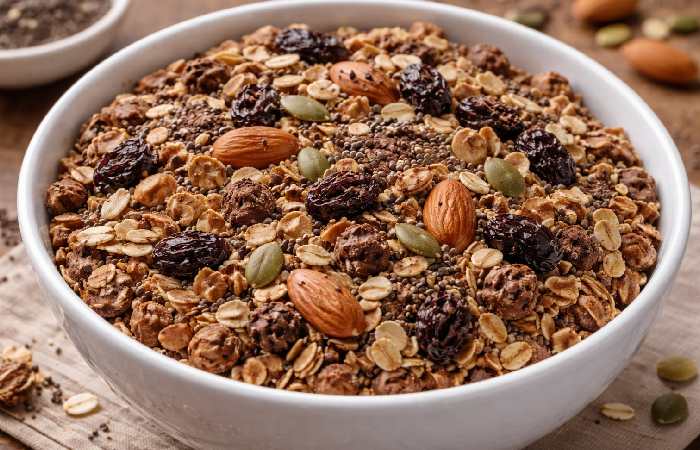
Uncooked Pintola protein oats mix with nuts, seeds, and chocolate oats.
Pintola High Protein Oats are a protein-fortified instant oat cereal** made by Pintola, an Indian brand primarily known for its peanut butter range. The oats combine instant oats (around 48%) with a soy‑based protein blend (around 22%) and are fortified with fruits, seeds, nuts, and cocoa solids. They are designed to serve as a high-protein breakfast that requires minimal preparation — just add hot milk or water.
The product is currently available primarily in a **Dark Chocolate** flavor, with a **Café Mocha** variant also gaining traction.
Both use jaggery or brown sugar–type sweeteners instead of refined white sugar, and the brand markets them as gluten‑free, trans fat‑free, and free from artificial colors and flavors.
Key Claims vs. Reality
| Claim on Packaging |
Reality |
| 25g protein per 100g |
Accurate per dry weight — drops to ~12.5g in a typical 50g serving |
| No refined sugar |
True — but jaggery / brown sugar still contributes ~10–14g sugar per 100g |
| Gluten-free |
Oats are naturally gluten-free, but cross-contamination during processing is possible |
| Rich in fiber |
~9.6g dietary fiber per 100g — genuinely high |
Full Nutrition Breakdown
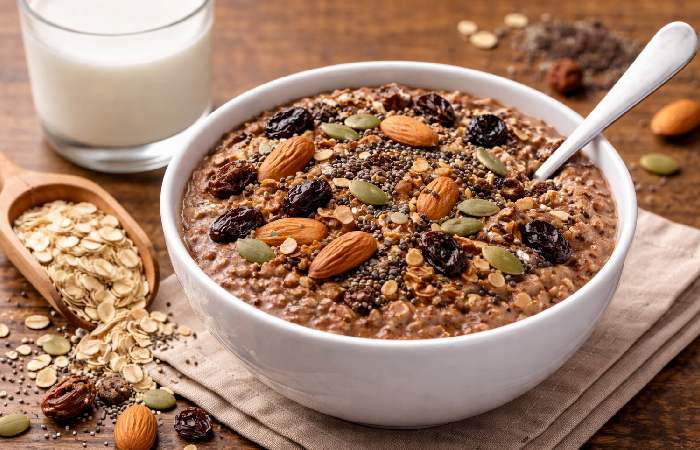
A typical protein oats serving prepared with milk for breakfast.
Understanding the macros matters. Here’s what Pintola High Protein Oats actually deliver across different serving scenarios.
Per 50g Serving (Dry) vs. Per 100g
| Nutrient |
Per 50g (Dry) |
Per 100g |
| Protein |
12.5g |
25g |
| Carbohydrates |
~25g |
~50g |
| Dietary Fiber |
~4.8g |
~9.6g |
| Total Fat |
~3.5g |
~7g |
| Saturated Fat |
~1g |
~2.1g |
| Trans Fat |
0g |
0g |
| Sugar |
~5g |
~10g |
| Energy |
~196 kcal |
~392 kcal |
| Sodium |
~65mg |
~130mg |
With Milk vs. Without Milk — What Changes?
When you prepare 50g of Pintola oats with 250ml of whole cow’s milk, the protein jumps to approximately **20.7g per bowl**. That’s a meaningful difference. The milk contributes about 8g of additional protein (mostly casein and whey), plus calcium, vitamin D, and additional calories (~150 kcal).
If you use plant-based milk like almond or oat milk, the protein bump is negligible — typically just 1–2g extra.
Understanding the Protein Blend
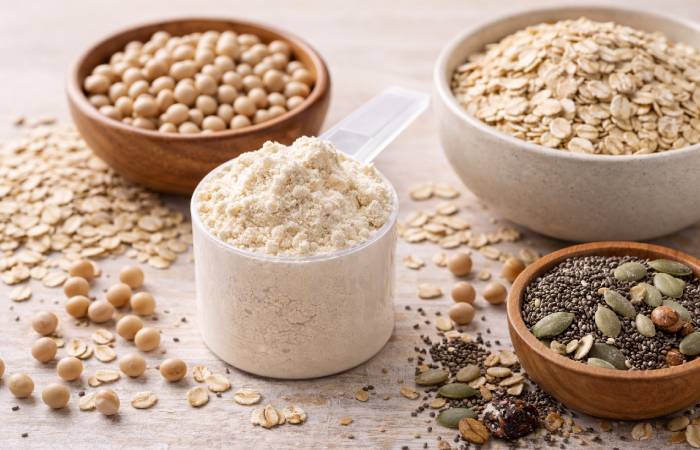
Key protein ingredients used in high protein oats blends.
This is where things get interesting. Pintola’s protein doesn’t come from oats alone. The 26% protein blend includes:
- Texturized soy protein — the main bulking protein
- Soy protein isolate — high concentration, ~90% protein by weight
- Whey protein concentrate — added in smaller amounts, higher biological value
The mix gives the label a high number, but the **quality** of that protein varies by source. We’ll break this down in the next section.
Complete Ingredients Analysis
Protein Sources — How Good Is the Quality?
Not all protein grams are equal. The body absorbs and utilizes different protein sources at different rates. The standard scientific measure is PDCAAS (Protein Digestibility-Corrected Amino Acid Score), a metric recognised by the World Health Organization for evaluating protein quality.
| Protein Source |
PDCAAS Score |
Present in Pintola? |
| Whey protein concentrate |
1.00 (highest) |
Yes |
| Soy protein isolate |
0.91 |
Yes (primary) |
| Texturized soy protein |
0.91 |
Yes |
| Casein (from milk) |
1.00 |
No (but added when using milk) |
| Pea protein |
0.89 |
No |
Soy protein scores well — 0.91 is genuinely high. But here’s the nuance: Pintola lists soy-based proteins first in the blend**, which means they form the majority. Whey concentrate, the highest-quality source, is listed last — indicating it’s the smallest component.
For most people eating a varied diet, this blend works fine. But if you’re a serious athlete relying on this as a primary protein source, the predominantly soy-based composition means slightly lower leucine content compared to a whey-dominant product.
The Jaggery Truth — “No Refined Sugar” Doesn’t Mean Low Sugar
This is the most commonly misunderstood claim. Pintola replaces refined white sugar with organic jaggery — which sounds healthier and is often marketed as a “natural” alternative.
Here’s the reality: jaggery is roughly 65–85% sucrose. Its glycemic index ranges from 60–85, which is only marginally lower than refined sugar (GI of ~65). For someone without blood sugar concerns, this difference is trivial. But for **diabetics or pre-diabetics**, the “no refined sugar” label can be misleading. The total sugar content per 100g still sits around 10g.
The practical takeaway: if you’re monitoring blood sugar, treat jaggery-sweetened products the same way you’d treat sugar-sweetened ones. Check your glucometer response.
Superseeds and Extras
The inclusion of chia seeds, pumpkin seeds, almonds, and raisins adds genuine nutritional value:
- Chia seeds — omega-3 ALA, soluble fiber
- Pumpkin seeds — magnesium, zinc, iron
- Almonds — vitamin E, healthy monounsaturated fats
- Raisins — natural sweetness, iron
These aren’t token amounts. The packaging lists fruits, nuts, and seeds at around 14% of the total composition — enough to make a noticeable difference in micronutrient intake.
Taste and Texture — Honest Review
Dark Chocolate Flavor Breakdown
The dark chocolate variant is the most popular — and for good reason. The flavor is rich without being overly sweet. Cocoa solids (7%) provide a genuine chocolatey taste, not the artificial kind you’d find in cheaper cereals. The jaggery adds a mild earthiness that pairs surprisingly well with the cocoa.
Compared to competitors like Alpino (which has a divisive peanut protein aftertaste) or Yogabar (which some reviewers describe as bitter-sweet), Pintola strikes a notably crowd-pleasing balance.
Texture When Cooked vs. Overnight Oats
- Cooked with hot milk (2 min): Creamy, porridge-like consistency. The almond and seed pieces provide a pleasant crunch that holds up well.
- Overnight oats: Softer, thicker texture. The chia seeds absorb liquid and add a pudding-like quality. This method brings out the sweetness more than cooking.
- Dry with cold milk: More cereal-like. Less creamy, but the crunch is maximized. Good for those who prefer a muesli-style experience.
Pintola vs Other High Protein Oats — Brand Comparison
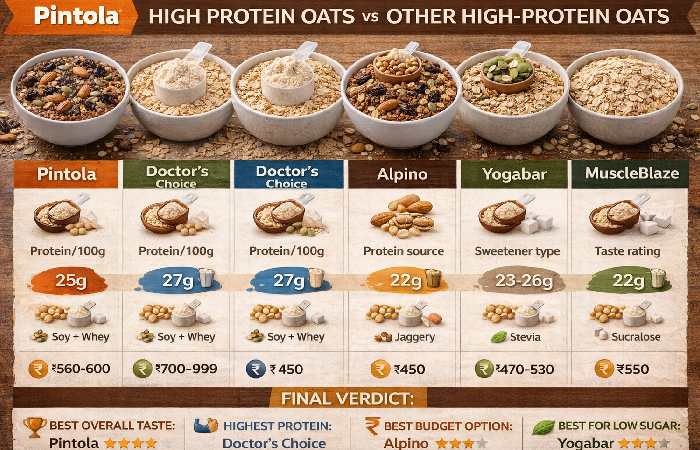
Comparison of Pintola high protein oats with other high protein oats brands in India.
This is the comparison table no other review gives you with this level of detail. Here’s how Pintola stacks up against four direct competitors in India.
| Parameter |
Pintola |
Doctor’s Choice |
Alpino |
Yogabar |
MuscleBlaze |
| Protein/100g |
25g |
27g |
22g |
23–26g |
22g |
| Primary Protein Source |
Soy + whey blend |
Soy + whey |
Peanut protein |
Soy + whey |
Soy + whey |
| Sweetener |
Organic jaggery |
Jaggery |
Jaggery |
Stevia (zero sugar) |
Sucralose |
| Price (approx. per kg) |
₹560–600 |
₹700–999 |
₹450 |
₹470–530 |
₹550 |
| Taste Rating (consensus) |
⭐⭐⭐⭐ |
⭐⭐⭐⭐½ |
⭐⭐½ |
⭐⭐⭐ |
⭐⭐⭐ |
| Lab Reports Published? |
No |
Yes |
No |
No |
No |
| Key Differentiator |
Balanced taste, trusted brand |
Highest protein, transparency |
Budget option |
Zero added sugar, probiotics |
Gym-brand appeal |
| Notable Concern |
Soy-heavy blend |
Higher price |
Poor taste reviews |
Mixed texture feedback |
Limited flavor range |
Pintola vs Doctor’s Choice
Doctor’s Choice edges ahead on two fronts: **protein content (27g vs. 25g)** and **transparency** — they publicly share third-party lab reports, which is rare in this category. Taste reviews are also slightly more favorable. The tradeoff? It costs 20–40% more per kg.
Verdict: If budget isn’t a constraint and you value verified protein claims, Doctor’s Choice is the stronger pick.
Pintola vs Alpino
Alpino is the budget king at ~₹450/kg, but consumer reviews consistently flag taste issues. The **peanut protein base** creates a divisive flavor profile — some enjoy it, many don’t. Protein content (22g) is also lower.
Verdict: Only consider Alpino if you’re on a strict budget AND enjoy peanut-flavored oats.
Pintola vs Yogabar
Yogabar’s standout feature is **zero added sugar** (using stevia) and select variants with added **probiotics**. Protein ranges from 23–26g depending on the variant. However, taste and texture feedback is mixed — multiple reviewers describe a bitter-sweet aftertaste.
Verdict: Better for sugar-conscious buyers. Pintola wins on overall taste experience.
Is Adding Whey to Plain Oats Actually Cheaper?
This is the question fitness communities on Reddit debate constantly — and the math is revealing.
| Setup |
Protein per Bowl |
Approx. Cost per Bowl |
| Pintola 50g + 250ml milk |
~20.7g |
~₹35–40 |
| Plain oats 50g + 1 scoop whey (25g) + milk |
~33g+ |
~₹30–35 |
| Yogabar 50g + milk |
~21g |
~₹30 |
With plain oats and a whey scoop, you get **significantly more protein at a similar or lower cost**. You also control the sweetener, the protein source quality, and the flavor.
When Pintola wins over DIY:
- You want zero prep beyond adding milk
- You enjoy the chocolate flavor without mixing powders
- You’re traveling or in an office with no blender
- You want a single-product solution, not a multi-ingredient stack
- You want maximum protein per rupee
- You prefer whey-only protein (higher leucine, higher BV)
- You want zero added sugar, period
- You already own a tub of whey
Benefits of Pintola High Protein Oats
Muscle Recovery and Sustained Energy
The protein blend supports post-workout muscle repair. While soy protein has a slightly lower leucine content than whey, the combination still provides all nine essential amino acids. The complex carbohydrates from oats deliver sustained energy without the crash associated with refined-grain cereals.
Fiber, Satiety, and Weight Management
High-fiber meals also slow gastric emptying, keeping you fuller for longer. For weight management, this reduces the temptation to snack between meals.
Heart Health and Beta-Glucan
How to Prepare Pintola High Protein Oats
Classic Hot Preparation (2 Minutes)
1. Pour 50g of Pintola oats into a bowl
2. Add 250ml hot milk (or water for fewer calories)
3. Stir well, let sit for 60–90 seconds
4. Top with sliced banana or a drizzle of honey (optional)
Overnight Oats Method
1. Combine 50g oats with 200ml cold milk in a jar
2. Add 1 tbsp chia seeds for extra thickness (optional)
3. Refrigerate for 6–8 hours (or overnight)
4. Stir in the morning, top with fresh fruit
Smoothie Bowl Hack
1. Blend 40g oats with 200ml milk, ½ frozen banana, and ice
3. Top with granola, berries, and a spoon of nut butter
4. Eat immediately — the texture is best fresh
Common Mistakes When Buying High Protein Oats
1. Chasing the protein number without checking the source.
25g of predominantly soy protein is not the same as 25g of whey. Always check which protein is listed first — that’s the dominant source.
2. Believing “no refined sugar” means “low sugar.”
Jaggery, coconut sugar, and honey all contain sucrose. Your pancreas doesn’t distinguish between refined and unrefined. If you’re diabetic, monitor your blood glucose response regardless of the sweetener branding.
3. Ignoring the cost-per-gram of protein.
A ₹600 pack delivering 25g protein per 100g might seem efficient — until you realize plain oats + a whey scoop delivers 60% more protein for a similar cost.
4. Skipping the allergen check.
Soy, whey (dairy), and tree nuts (almonds) are all common allergens. Pintola contains all three. If you have sensitivities, read the full ingredient panel — not just the front label.
5. Treating protein oats as a protein shake replacement.
A 50g serving delivers ~12.5g protein dry. That’s a solid breakfast supplement, not a replacement for a 30g protein shake post-workout. Set expectations correctly.
Who Should Buy Pintola High Protein Oats — And Who Shouldn’t
Best For:
- Gym-goers** wanting a convenient, protein-enriched breakfast without cooking separate meals
- Busy professionals** replacing sugary cereals or skipping breakfast entirely
- Chocolate lovers** who want a genuinely enjoyable healthy option
- Travellers** needing single-serving, no-blender protein meals
- Anyone new to protein-focused eating** — low barrier to entry
Not For:
- Soy-allergic individuals — soy is the primary protein source
- Strict keto dieters** — ~25g net carbs per 50g serving is too high
- Budget-first buyers** — plain oats + whey is cheaper and delivers more protein
- Diabetics (without monitoring)** — jaggery raises blood sugar similarly to refined sugar
- Anyone needing 30g+ protein per meal** — a single serving won’t get you there without adding whey separately
Final Verdict
Pintola High Protein Oats are a genuinely solid mid-range option** in India’s growing high-protein breakfast category. The taste is among the best in its class, the nutrition profile is competitive, and the convenience factor is hard to beat.
That said, they’re not perfect. The protein blend leans heavily on soy rather than whey, the “no refined sugar” claim deserves a reality check, and the cost-per-gram isn’t the most efficient if you’re willing to DIY.
Our recommendation: If convenience and taste matter more than maximum protein efficiency, **Pintola High Protein Oats** are a strong buy — especially the Dark Chocolate variant. If you want the highest protein with verified lab transparency, look at Doctor’s Choice. And if you’re optimizing purely for cost and protein quantity, go DIY with plain oats and whey.
Frequently Asked Questions
Q1: How much protein does Pintola High Protein Oats have per serving?
A 50g dry serving contains 12.5g of protein. When prepared with 250ml whole cow’s milk, the total protein per bowl rises to approximately 20.7g.
Q2: Are Pintola High Protein Oats good for weight loss?
Yes, they can support weight loss when consumed as part of a calorie-controlled diet. The high fiber content (9.6g/100g) promotes satiety, reducing the urge to snack. However, watch portion sizes — each 50g serving has approximately 196 calories before adding milk.
Q3: Is Pintola better than Doctor’s Choice high protein oats?
Pintola offers 25g protein/100g with strong taste reviews. Doctor’s Choice provides 27g protein/100g with published lab reports for transparency. Doctor’s Choice edges ahead on protein content and accountability; Pintola is more widely available and slightly more affordable.
Q4: Do Pintola High Protein Oats contain artificial sweeteners?
No. Pintola uses organic jaggery as the primary sweetener instead of refined sugar or artificial sweeteners like sucralose or aspartame. However, jaggery does contribute natural sugars (~10g per 100g).
Q5: Can you eat Pintola High Protein Oats every day?
Q6: Are Pintola High Protein Oats gluten-free?
Pintola markets them as gluten-free, and oats are naturally gluten-free. However, cross-contamination during processing is possible. If you have celiac disease, confirm the batch is certified gluten-free before consuming.
About Healthbloomin
Healthbloomin publishes practical, easy-to-understand content on health, technology, business, marketing, and lifestyle. Articles are based mainly on reputable, publicly available information, with AI tools used only to help research, organise, and explain topics more clearly so the focus stays on real‑world usefulness rather than jargon or unnecessary complexity.
Disclaimer
This content is for informational purposes only and does not constitute medical, nutrition, or professional advice. Always check the latest product label and consult a qualified healthcare provider or dietitian for personalised guidance.