Sourcing sterile injectables for emerging markets is rarely straightforward. Regulatory approvals differ by country, quality systems must clear multiple auditing bodies, and finding a manufacturer that can handle both contract and own-brand production adds another layer of complexity.
Swiss Parenterals is a name that surfaces often in procurement discussions — but most available information is limited to thin directory listings or database entries. This guide goes beyond the surface. It covers the company’s history, full product portfolio, manufacturing capabilities, global certifications, the Eris Lifesciences acquisition, and a clear framework for deciding whether Swiss Parenterals is the right manufacturing partner for your needs.
Whether you are a **pharma procurement officer** evaluating CDMO options, an **industry analyst** tracking Indian pharmaceutical exporters, or a **professional exploring career opportunities**, this guide provides the depth that directory profiles do not.
Swiss Parenterals at a Glance
- What is Swiss Parenterals? → India-based pharmaceutical manufacturer and CDMO specializing in sterile injectables since 1997
- What do they make? → 250+ products across injectables, oral solids, OTC, and nutraceuticals for 80+ countries
- Who owns them? → Majority-owned by Eris Lifesciences (70% stake as of 2024, with plans announced to acquire the remaining 30%)
- Why they matter → 1,000+ approved dossiers, 190 unique molecules, EU-GMP / TGA / ANVISA / PIC/s certified
- Who should work with them? → Mid-to-large pharma companies needing sterile injectable contract manufacturing with emerging-market registrations
What Is Swiss Parenterals?
Swiss Parenterals Ltd is an Ahmedabad-based pharmaceutical company that manufactures and exports generic and specialty parenteral products. Established in 1997, it has grown into a **third-generation pharmaceutical exporter** with a presence in more than 80 countries worldwide.
Company History and Founding
Swiss Parenterals was incorporated on February 4, 1997, as Swiss Parenterals Pvt Ltd. The company was founded in Ahmedabad, Gujarat — India’s pharmaceutical manufacturing corridor — with a focus on sterile injectable production.
Over two decades, Switzerland-quality aspirations drove the company to secure regulatory approvals from the European Union, Australia, Brazil, Mexico, and other major markets. By 2024, Swiss Parenterals had built a portfolio of over 1,000 approved dossiers covering approximately 190 unique molecules.
The Name — Why “Swiss” from Ahmedabad?
The name “Swiss Parenterals” reflects the company’s aspirational positioning rather than geographic origin. The brand signifies precision, quality, and reliability — values associated with Swiss manufacturing — applied to parenteral (injectable) pharmaceutical production. The company is entirely Indian-owned and operated, headquartered in Ahmedabad, Gujarat.
Swiss Parenterals Product Portfolio
Swiss Parenterals Ltd offers a broad range of pharmaceutical products across multiple dosage forms. The core strength lies in sterile injectables, but the portfolio extends into oral and topical formulations.
Sterile Injectables — The Core Product Line
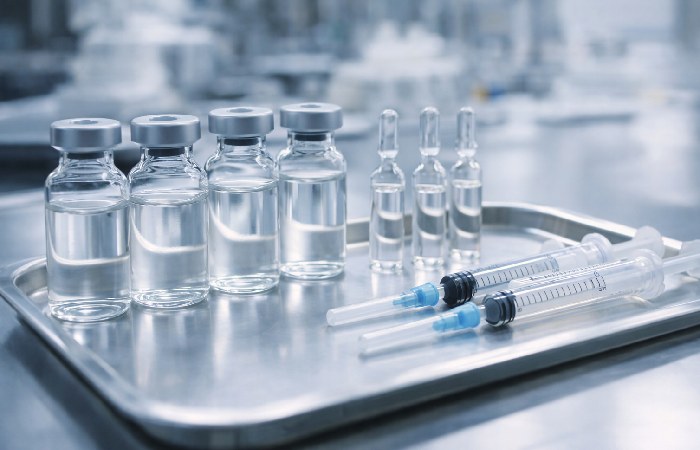
Common sterile injectable formats used in pharmaceutical manufacturing including vials, ampoules, and prefilled syringes.
The injectable portfolio includes several dosage form categories:
| Dosage Form |
Description |
Examples |
| Liquid Vials |
Ready-to-use sterile solutions in glass vials |
Amikacin, Ondansetron, Pantoprazole |
| Ampoules |
Single-dose sealed glass containers |
Diclofenac, Ketoprofen, Hydrocortisone |
| Lyophilized (Freeze-Dried) |
Powder for reconstitution before injection |
Meropenem, Ceftazidime, Vancomycin |
| Dry Powder Injections |
Sterile powders in vials |
Cephalosporins, Carbapenems, Penicillins |
| Pre-Filled Syringes |
Ready-to-administer sterile delivery |
Enoxaparin Sodium, Heparin Sodium |
| Sterile Eye Drops |
Ophthalmic solutions manufactured under aseptic conditions |
Various ophthalmic formulations |
Oral Solid Dosage, Semi-Solids, and OTC Products
Beyond injectables, Swiss Parenterals manufactures:
- Tablets and capsules** — oral solid dosage forms
- Syrups and suspensions** — liquid oral formulations
- Ointments and creams** — semi-solid topical preparations
- OTC products** — over-the-counter healthcare products
- Nutraceuticals** — nutritional supplements and wellness products
- Veterinary products** — animal health formulations
Therapeutic Categories Covered
Swiss Parenterals’ products span a wide range of therapeutic areas:
- Anti-infectives:** Cephalosporins, Carbapenems, Penicillins, Antifungals
- Anti-malarials:** Artesunate, Artemether formulations
- Cardiovascular:** Nitroglycerin, Nicorandil, Hydralazine
- Pain Management:** Ketoprofen, Lornoxicam, Pentazocine
- Gastrointestinal:** Pantoprazole, Esomeprazole, Omeprazole, Rabeprazole
- Neurological/CNS:** Ketamine, Diazepam, Phenytoin
- Anticoagulants:** Heparin Sodium, Enoxaparin Sodium
- Anesthetics:** Bupivacaine, Isoflurane, Thiopental
- Muscle Relaxants:** Atracurium, Vecuronium, Succinylcholine
Manufacturing Capabilities and Facilities
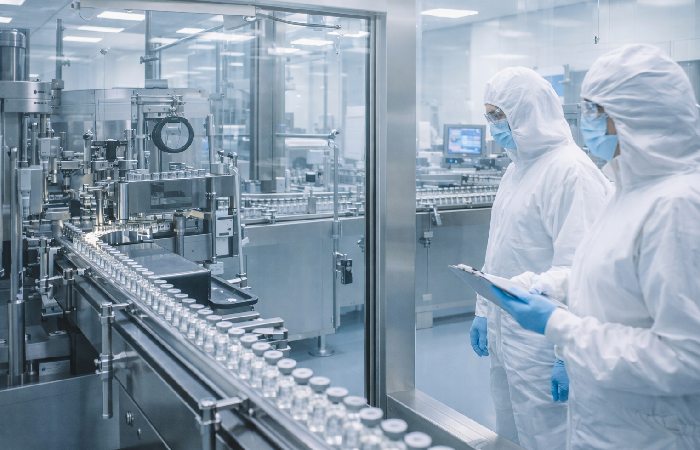
Modern pharmaceutical cleanrooms use aseptic processing and automation to maintain sterile production environments.
Swiss Parenterals operates **three manufacturing units** in Ahmedabad, India. Each facility is equipped with fully automated sterile and oral dosage handling capabilities, designed to meet current Good Manufacturing Practice (cGMP) requirements.
Sterile Manufacturing Process and cGMP Compliance
Sterile injectable manufacturing demands controlled environments where microbial contamination is eliminated at every stage. Swiss Parenterals’ facilities use:
- Cleanroom technology** — ISO-classified environments with HEPA filtration
- Aseptic processing** — filling operations conducted under laminar air flow
- Lyophilization equipment** — freeze-drying chambers for moisture-sensitive formulations
- Automated visual inspection** — machine-based particle and defect detection
- Environmental monitoring** — continuous air and surface microbial testing
The manufacturing process follows cGMP standards — a regulatory framework that ensures pharmaceutical products are consistently produced and controlled according to quality standards. These practices are verified through regular inspections by international regulatory bodies.
Production Capacity and Automation
Swiss Parenterals’ combined facilities handle multiple production lines for vials, ampoules, pre-filled syringes, and lyophilized products. The automation reduces human intervention in the sterile zone, which is critical for maintaining the aseptic conditions required for injectable products.
The company reported a team of approximately 415 employees as of 2025, supporting operations across manufacturing, quality control, quality assurance, regulatory affairs, and analytical development.
Certifications and Regulatory Approvals
One of Swiss Parenterals’ strongest competitive assets is its portfolio of international regulatory approvals. These certifications allow the company to export products to markets that require specific quality standards.
| Certification |
Issuing Body |
Region Covered |
Significance |
| EU-GMP |
European Medicines Agency |
European Union |
Gold standard for pharmaceutical manufacturing quality; aligns with EMA GMP guidelines |
| PIC/s |
Pharmaceutical Inspection Co-operation Scheme |
54 member countries |
Harmonized GMP inspection standards across participating regulatory authorities |
| TGA |
Therapeutic Goods Administration |
Australia |
Approval for Australian market access; among the strictest regulatory bodies globally |
| ANVISA |
Agência Nacional de Vigilância Sanitária |
Brazil |
Enables access to Latin America’s largest pharmaceutical market |
| Cofepris |
Federal Commission for Protection against Health Risks |
Mexico |
Facilitates Central American and some Latin American market access |
| WHO-GMP |
World Health Organization |
Global (UN/UNICEF procurement) |
Enables supply to international aid and public health programs |
Dossier Portfolio — 1,000+ Approved Dossiers
Swiss Parenterals has filed and received approvals for over **1,000 dossiers** covering approximately **190 unique molecules** across its target markets. A dossier — also called a Drug Master File (DMF) or Common Technical Document (CTD) — is the regulatory submission package required for each product in each country.
This extensive dossier portfolio is a significant competitive differentiator. Building a dossier library of this scale takes years of regulatory effort and investment, creating a substantial barrier to entry for competitors.
Swiss Parenterals as a CDMO — Contract Manufacturing Services
Swiss Parenterals operates a **dual business model**: manufacturing and selling products under its own brand **and** providing Contract Development and Manufacturing Organization (CDMO) services to other pharmaceutical companies.
Services Offered
The CDMO service spans the full product lifecycle:
- Formulation Development** — Developing the drug product formulation from API to finished form
- Analytical Method Development** — Creating testing protocols for quality verification
- Technology Transfer** — Adapting processes from lab scale to commercial production
- Process Validation** — Confirming manufacturing processes consistently produce quality products
- Commercial Manufacturing** — Full-scale production in cGMP-certified facilities
- Regulatory Filing Support** — Dossier preparation and submission to target-country regulators
Own-Brand vs. CDMO — The Dual-Model Advantage
Most pharmaceutical manufacturers operate in one lane — either selling their own brands or doing contract work for others. Swiss Parenterals does both, and this has strategic implications:
- For CDMO clients:** The company’s own-brand experience means they understand commercialization challenges — not just manufacturing. They can advise on regulatory strategy and market-readiness because they navigate those processes for their own products.
- According to recent business press coverage, Swiss Parenterals generated revenue of over ₹350 crore in FY25, indicating commercially meaningful scale in emerging markets.
Eris Lifesciences Acquisition — What Changed
The biggest development in Swiss Parenterals’ recent history is its majority acquisition by Eris Lifesciences, one of India’s fastest-growing pharmaceutical companies.
Two-Phase Acquisition (2024–2026)
The acquisition happened in two stages:
| Phase |
Date |
Stake |
Value |
| Phase 1 |
February 2024 |
51% by Eris + 19% by promoter group = 70% total |
₹637.5 crore (~$76.7M) |
| Phase 2 |
January 2026 |
Remaining 30% |
₹423.3 crore (~$51M) |
Following Phase 1, Swiss Parenterals became a majority-owned subsidiary of Eris Lifesciences, with a plan in place for Eris to acquire the remaining 30% stake.
Why Eris Bought the Regulatory Assets, Not Just Revenue
Industry analysts note that the acquisition’s strategic value extends beyond Swiss Parenterals’ ₹372 crore revenue. Eris Lifesciences acquired:
- 1,000+ approved dossiers** covering 190 molecules — each representing years of regulatory investment
- International certifications** (EU-GMP, TGA, ANVISA, PIC/s, Cofepris) that would take years to obtain independently
- Established export relationships** in 80+ countries, particularly in Africa, Asia Pacific, and Latin America
- Sterile injectable manufacturing capabilities** — a high-barrier-to-entry segment requiring specialized facilities
Eris has also signaled its intent to leverage Swiss Parenterals’ capabilities for **insulin and semaglutide** opportunities in FY26, connecting the acquisition to the global diabetes and GLP-1 market opportunity.
Global Presence — 80+ Country Export Footprint
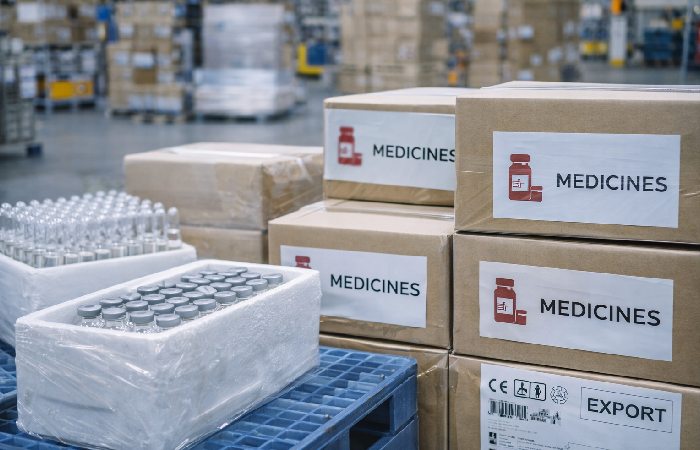
Pharmaceutical manufacturers supplying global markets rely on regulated export logistics and international distribution networks.
Swiss Parenterals exports pharmaceutical products to over 80 countries. The export footprint concentrates in regions where international certifications (EU-GMP, PIC/s, TGA) provide market access:
- Africa** — Multiple Sub-Saharan and North African markets (NAFDAC-registered products in Nigeria)
- Asia Pacific** — Southeast Asia, Central Asia, and Oceania (TGA-approved for Australia)
- Latin America** — Brazil (ANVISA), Mexico (Cofepris), and broader Central/South American markets
- Europe** — EU-GMP certified for European market access
- Middle East** — GCC and broader MENA region
This geographic diversification reduces dependency on any single market and provides resilience against regional regulatory or economic disruptions.
Common Misconceptions About Swiss Parenterals
Swiss Parenterals is a Swiss company
No. Despite the name, Swiss Parenterals is entirely Indian — founded, headquartered, and operated in Ahmedabad, Gujarat. The name reflects quality aspirations, not geographic origin.
They only make injectables
Not anymore. While sterile injectables remain the core competency, the product portfolio now includes oral solids, semi-solids, OTC products, nutraceuticals, and veterinary formulations.
They are too small to handle large-volume contracts
With multiple manufacturing units, a few hundred employees, revenue of over ₹350 crore in FY25, and 1,000+ registered dossiers, Swiss Parenterals operates at commercially significant scale — particularly for emerging-market supply.
The Eris acquisition means they’ve lost independence
Swiss Parenterals is now a wholly-owned subsidiary, but this brings access to Eris Lifesciences’ capital, domestic distribution network, and R&D resources — potentially strengthening rather than diminishing capabilities.
Who Should Work With Swiss Parenterals (And Who Shouldn’t)
Best For:
- Mid-to-large pharma companies** needing sterile injectable contract manufacturing with multi-country regulatory support
- Companies targeting emerging markets** in Africa, Asia Pacific, and Latin America where Swiss Parenterals already holds registrations
- Firms needing complex parenteral formulations** — lyophilized products, dry powder injectables, pre-filled syringes
- Generic pharmaceutical companies** seeking a CDMO with an established dossier library to accelerate market entry
Not For / Proceed With Caution:
- Companies focused exclusively on the US market** — Swiss Parenterals does not currently hold US FDA approval, which limits access to the world’s largest pharmaceutical market
- Biologic or biosimilar manufacturers** — the facilities are designed for small-molecule sterile products, not large-molecule biologics
- Companies needing oncology sterile manufacturing** — separate dedicated facilities are typically required for cytotoxic products
- Very small-volume, specialty compounding needs** — the manufacturing setup is optimized for commercial-scale production
Final Verdict — Is Swiss Parenterals a Reliable Partner?
Swiss Parenterals has built a strong position over more than two decades as a sterile injectable manufacturer with genuine global reach. The combination of 1,000+ approved dossiers, multiple international certifications, and an established 80-country export network makes it a credible CDMO option for companies targeting emerging markets.
The Eris Lifesciences acquisition adds financial backing and strategic direction. But the absence of US FDA approval remains a notable limitation for companies whose primary market is North America.
**Bottom line:** For sterile injectable contract manufacturing aimed at non-US regulated markets — particularly Africa, Latin America, and Asia Pacific — Swiss Parenterals is a **well-established, credentialed option** worth evaluating. Request a capabilities presentation and audit their specific product registrations in your target markets before proceeding.
Frequently Asked Questions
Q: What does Swiss Parenterals manufacture?
A: Swiss Parenterals manufactures sterile injectables (vials, ampoules, lyophilized products, pre-filled syringes), oral solid dosage forms, semi-solids, OTC products, nutraceuticals, and veterinary formulations. Their primary expertise is in parenteral (injectable) pharmaceutical products.
Q: Where is Swiss Parenterals located?
A: Swiss Parenterals is headquartered in Ahmedabad, Gujarat, India. The company operates three manufacturing units within the Ahmedabad region, all equipped with automated sterile production capabilities.
Q: Is Swiss Parenterals EU-GMP certified?
A: Yes. Swiss Parenterals holds EU-GMP certification along with approvals from PIC/s, Australian TGA, Brazilian ANVISA, Mexican Cofepris, and WHO-GMP. These certifications allow the company to export to regulated markets across Europe, Oceania, Latin America, and international aid programs.
Q: Who owns Swiss Parenterals?
A: Swiss Parenterals is a wholly-owned subsidiary of Eris Lifesciences, an Indian pharmaceutical company. Eris acquired a 70% stake in February 2024, followed by the remaining 30% in January 2026, completing the full acquisition.
Q: Does Swiss Parenterals offer contract manufacturing (CDMO) services?
A: Yes. Swiss Parenterals operates as a CDMO, offering end-to-end services including formulation development, analytical method development, technology transfer, process validation, commercial manufacturing, and regulatory filing support in its cGMP-certified facilities.
Q: How many countries does Swiss Parenterals export to?
A: Swiss Parenterals exports to over 80 countries, with strong presence in Africa, Asia Pacific, Latin America, Europe, and the Middle East. The company has filed over 1,000 dossiers covering approximately 190 unique molecules across these markets.
About Healthbloomin
Healthbloomin publishes practical, easy-to-understand content on health, technology, business, marketing, and lifestyle. Articles are based mainly on reputable, publicly available information, with AI tools used only to help research, organise, and explain topics more clearly so the focus stays on real‑world usefulness rather than jargon or unnecessary complexity.
Disclaimer
This article is for informational and professional reference purposes only and does not constitute legal, regulatory, investment, or medical advice. The details shared about Swiss Parenterals and Eris Lifesciences (including ownership, revenue, certifications, and market presence) are based on publicly available information at the time of writing and may change. Readers should independently verify key facts, consult official company filings and announcements, and seek advice from qualified professionals before making any business, investment, or partnership decisions related to the companies mentioned.