Fixderma Sunscreen SPF 50 is a broad-spectrum sunscreen range designed to protect against both UVB (sunburn) and UVA (aging and pigmentation) damage. With SPF 50+ and PA+++ ratings across most variants, it is positioned as a daily-use sunscreen suitable for Indian weather and different skin types.
But is Fixderma SPF 50 actually good for oily or acne-prone skin? In this detailed review, we break down how it works, its ingredients, texture performance, variant differences, and how it compares with other popular SPF 50 sunscreens in India.
Key Facts About Fixderma SPF 50 Sunscreen
1. Fixderma Shadow SPF 50+ Gel Sunscreen
-
Gel-based broad-spectrum sunscreen with SPF 50+ and PA+++ protection, specially designed for oily, acne-prone and sensitive skin.
-
Lightweight, oil-free, non-comedogenic, non-greasy and marketed to leave no white cast, making it practical for everyday use in warm or humid climates.
2. Fixderma Shadow SPF 50+ Cream Sunscreen
-
Cream variant with SPF 50+ and PA+++ broad-spectrum UVA/UVB protection, formulated for dry and sensitive skin.
-
Described as photostable, water-resistant, moisturising, lightweight and non-sticky, with minimal to no visible white cast.
3. Fixderma Shadow Tinted Sunscreen SPF 50
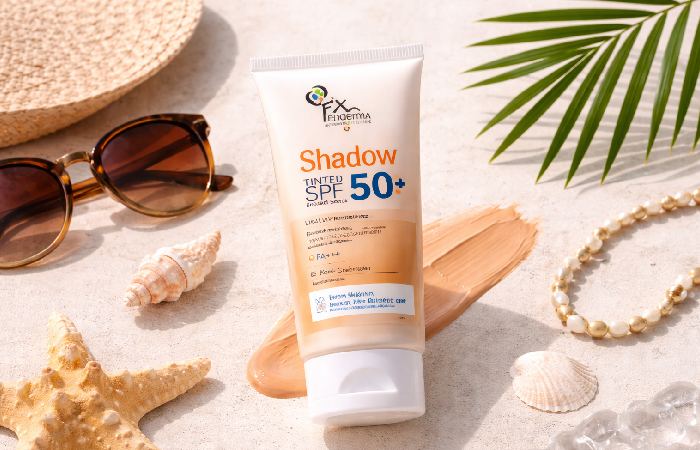
Fixderma Shadow tinted SPF 50 sunscreen for face with UVA/UVB defense.
-
Tinted SPF 50+ PA+++ sunscreen that offers sheer tone correction plus broad-spectrum protection, with hydrating ingredients like Hyaluronic Acid and Vitamin E.
-
Available in multiple shades and marketed as lightweight with no white cast for most users.
Other Fixderma SPF 50 Formats
-
Fixderma’s sunscreen range also includes body and Rx variants with SPF 50+ and PA+++ for larger areas or prescription use, all positioned as broad-spectrum UVA/UVB protection.
All these variants are designed to protect skin from both UVA rays (linked to tanning and aging) and UVB rays (linked to sunburn) with SPF 50+ and at least PA+++ defense when used correctly.
What Makes Fixderma SPF 50 Effective
Fixderma SPF 50 stands out primarily because of three core factors: protection level, texture design, and climate suitability.
Broad-Spectrum Protection
With SPF 50 and PA+++ rating, it protects against both UVB (sunburn) and UVA (premature aging and pigmentation). This balance is crucial in high-UV environments where long-term pigmentation damage is common.
Lightweight Gel Technology
Unlike thick cream sunscreens that can trap oil, the gel-based formulation spreads easily and absorbs quickly. This reduces pore congestion, making it more suitable for oily and acne-prone skin.
Daily Wear Comfort
Many users abandon sunscreen due to heaviness or stickiness. Fixderma’s lightweight feel encourages consistent daily use — which is more important than SPF number alone.
Consistency in application determines effectiveness more than label claims.
Gel vs Cream vs Tinted – Which Is Best for You?
Fixderma offers different variants. Choosing the correct one depends entirely on skin type and usage context.
Gel Variant
Best for:
-
Oily skin
-
Acne-prone skin
-
Humid climates
-
Office / daily wear
Finish: Semi-matte
Hydration level: Low to moderate
Cream Variant
Best for:
Finish: Slightly dewy
Hydration level: Moderate
Tinted Variant
Best for:
-
Light coverage seekers
-
No-makeup days
-
Redness or uneven tone
Finish: Natural coverage
Note: Shade match may vary on deeper skin tones.
How Fixderma SPF 50 Works
Fixderma SPF 50 sunscreens use a combination of UV filters and skin-supporting ingredients to help prevent harmful ultraviolet radiation from damaging skin cells. The SPF number indicates the level of UVB protection, while the PA+++ marker (present on many Fixderma Shadow SPF 50+ products) signals high UVA defense, which is important for reducing sunburn, pigmentation and signs of photoaging in sun-intense regions like India.
Key functional ingredients commonly found in Fixderma SPF 50 formulas include:
-
UV filters such as Titanium Dioxide, Avobenzone and other approved filters that help shield against UVA and UVB (the exact combination varies by variant).
-
Hydrating or soothing ingredients in some formulas, such as Panthenol or Vitamin E, which help support skin comfort.
-
Gel-based vehicles in certain variants, which support quick absorption and a less greasy feel, especially for oily skin.
Together, these components form a protective film that helps maintain skin health during routine daylight exposure when used correctly and reapplied as directed, which is consistent with general sun safety advice from the World Health Organization.
What SPF & PA Mean
-
SPF (Sun Protection Factor) indicates how well a sunscreen protects against UVB rays that cause sunburn; SPF 50 blocks most UVB rays when applied in sufficient quantity.
-
PA rating reflects UVA protection:
-
PA+++ = high UVA protection.
-
PA++++ = very high UVA protection, commonly seen in some competitor sunscreens.
Fixderma’s SPF 50+ with PA+++ means solid daily UVA and UVB protection for most routine and moderate sun exposure, while some alternatives with PA++++ may offer slightly higher UVA defense for longer or harsher sun conditions.
Ingredient Breakdown: UV Filters & Skin Feel
UV Protection Ingredients
Fixderma SPF 50 typically uses a combination of physical and/or chemical UV filters depending on the variant.
Common sunscreen filters include:
Broad-spectrum protection depends on the stability and balance of these filters.
Oil-Control & Texture Ingredients
The gel variant often includes:
-
Lightweight silicone-based agents
-
Oil-free formulation components
-
Non-comedogenic ingredients
These help reduce greasiness and improve spreadability without clogging pores.
Potential Sensitivity Factors
Users with very sensitive skin should check for:
-
Fragrance content
-
Alcohol presence
-
Preservative sensitivity
Patch testing is recommended before full application.
Who Should Use Fixderma SPF 50?
Best For Oily & Acne-Prone Skin
Suitable for Combination Skin
Works well on oily T-zone areas while remaining tolerable on normal areas.
May Not Suit Very Dry Skin
Gel-based formulas may not provide enough hydration for dry skin types unless layered over moisturizer.
White Cast Consideration
On medium to deep skin tones, mineral filters may leave a mild white cast initially, but it typically settles after blending.
Texture, Finish & White Cast Test
Based on formulation characteristics:
-
Spreadability: Smooth and lightweight
-
Absorption time: 30–60 seconds
-
Finish: Semi-matte
-
Shine after 30 minutes: Minimal
-
Under makeup: Generally compatible
-
Reapplication: Does not pill significantly when layered properly
-
Humidity performance: Suitable for daily indoor and moderate outdoor use
Not designed as a heavy sports sunscreen.
Who Should Be Cautious or Consider Alternatives
-
Very sensitive or reactive skin: Some users may experience irritation or dislike fragrance in certain sunscreens; patch testing is advisable if you are sensitive.
-
High-intensity outdoor exposure or water sports: For long hours under strong sun or water sports, dermatologists often recommend sunscreens with PA++++ and clear water- or sweat-resistant labeling.
-
Very deep skin tones: As with many sunscreens, some formulas containing mineral filters can leave a temporary white cast, which may be more noticeable on darker skin until fully blended.
Benefits of Fixderma SPF 50
-
Broad-spectrum UVA and UVB defense in SPF 50+ formats, important for daily sun protection.
-
Multiple formulations (gel, cream, tinted) so users can choose textures that suit their skin type and preferences.
-
Non-greasy gel options that tend to work well in hot and humid conditions.
-
Cream and tinted versions that can feel more hydrating and offer a smoother cosmetic finish on normal to dry skin.
Drawbacks & Real-World Notes
-
Some users report they dislike fragrance in certain sunscreens or find them irritating, which can be an issue for very sensitive skin.
-
Pilling or residue can occur if too much product is applied at once or if layers (moisturiser, makeup) are added without allowing time to set.
-
Like any sunscreen, one application does not last all day; reapplication is needed for sustained outdoor exposure.
-
Even high SPF cannot replace good habits like using hats, clothing and seeking shade during peak sun hours.
Overall, many reviewers describe Fixderma Shadow SPF 50+ gel and related variants as lightweight, blendable and relatively low in white cast for everyday use, particularly on oily or combination skin.
Step-by-Step: How to Use Fixderma SPF 50
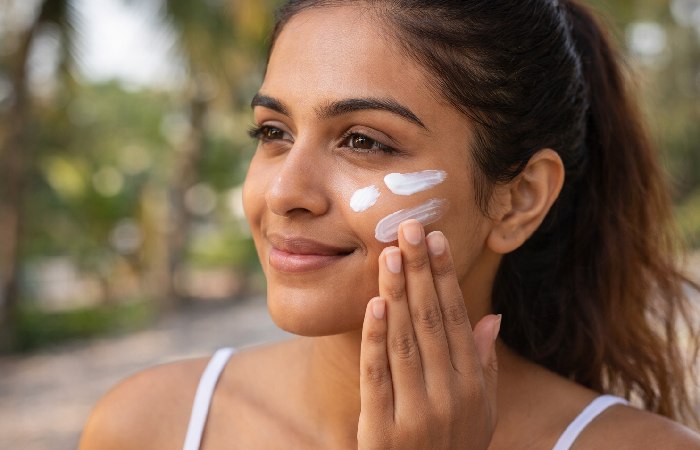
Correct sunscreen application helps ensure claimed protection.
-
Prep
Cleanse and moisturise your skin so it is clean and comfortable before sunscreen.
-
Apply
Use a generous, even layer on the face, neck and any exposed areas about 15–20 minutes before sun exposure.
-
Don’t scrimp
Applying too little product reduces the effective protection, regardless of the SPF number on the label.
-
Reapply
If outdoors, reapply every 2–3 hours and after heavy sweating, swimming or wiping the face, following common dermatology guidance such as that from the American Academy of Dermatology.
-
Layering with makeup
Allow sunscreen to settle before applying makeup to reduce the chance of pilling; many gel and fluid sunscreens work well under makeup.
Fixderma SPF 50 Variants You May Consider
-
Gel sunscreen – Lightweight, non-greasy feel, often marketed for oily and acne-prone skin.
-
Cream sunscreen – More emollient and suited to normal to dry skin types.
-
Tinted SPF – Offers sheer coverage plus SPF 50+ and PA+++, positioned as suitable for daily wear and under makeup.
-
Body / Rx formats – Other SPF 50+ PA+++ creams and lotions for body or prescription use are available in the Fixderma range; always follow individual directions for use.
Fixderma SPF 50 vs Other Popular SPF 50 Sunscreens (India)
Many Indian users compare Fixderma SPF 50 with other high-SPF sunscreens that are well-rated online and often recommended by dermatology-led brands. If you’re comparing options, you can also explore our in-depth review of Mamaearth SPF 50 sunscreen to understand differences in texture, protection level, and finish.
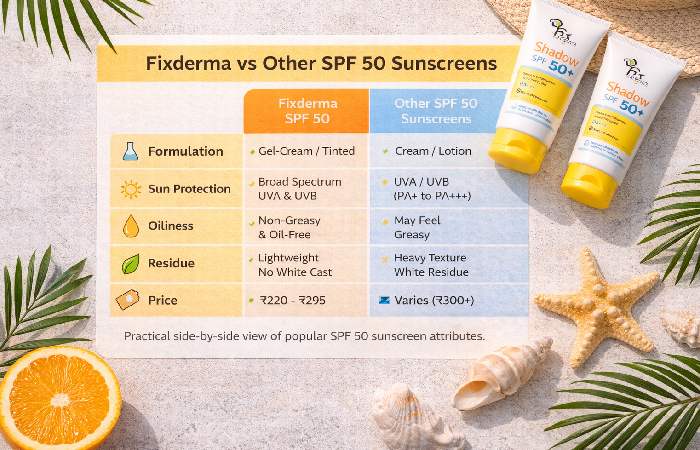
Practical side-by-side view of popular SPF 50 sunscreen attributes.
Comparison Table
| Feature / Product |
Fixderma Shadow SPF 50+ (PA+++) |
The Derma Co 1% Hyaluronic Sunscreen Aqua Gel SPF 50 PA++++ |
Neutrogena UltraSheer SPF 50+ PA++++ |
Minimalist Broad Spectrum SPF 50 PA++++ |
| UVA protection |
High (PA+++) |
Very high (PA++++) |
Very high (PA++++) |
Very high (PA++++) |
| Texture |
Gel & cream options |
Lightweight aqua gel |
Ultra-light fluid / lotion feel |
Lightweight cream/gel-cream, non-greasy |
| White cast |
Marketed as low to minimal, especially gel |
Marketed as no visible white cast |
Marketed as invisible / no white cast for most users |
Marketed as no white cast |
| Finish |
Matte to smooth, depending on variant |
Lightweight, hydrating finish |
Very lightweight, non-sticky finish |
Lightweight, smooth, non-shiny |
| Suitability |
Oily, combination and normal (gel); normal to dry (cream/tinted) |
Most skin types, including many sensitive users |
Most skin types, including many sensitive users |
All skin types, including many sensitive users |
| Extra benefits |
Multiple formats, value-focused pricing |
Hyaluronic Acid & Vitamin E for hydration |
Very light feel; widely available |
Multi-vitamin / hydrating actives in some variants |
| Typical price band (INR)* |
Often on the lower side in its category |
Mid-range |
Mid to higher, depending on size |
Mid-range |
*Prices vary by retailer, offers and pack size; treat this as a general band, not a fixed amount.
Dermatology-led brands and reviewers often highlight PA++++ sunscreens as offering very high UVA protection, which can be advantageous in countries with strong year-round UV exposure like India, especially for those outdoors longer.
How They Compare — Key Points
SPF and UVA Protection
-
Fixderma Shadow SPF 50+ with PA+++ offers high UVA protection suitable for routine daily use.
-
Competitors like The Derma Co 1% Hyaluronic Sunscreen Aqua Gel and Minimalist Broad Spectrum SPF 50 provide PA++++, which is a step higher in UVA rating and can be useful for longer or more intense sun exposure.
Texture & Wear
-
Fixderma gel absorbs quickly and is positioned as a light, non-greasy option for everyday wear, including in humidity.
-
Neutrogena UltraSheer sunscreens are widely praised for an ultra-light, non-sticky feel that works well under makeup or alone.
-
Minimalist and The Derma Co aqua gel variants tend to emphasise hydrating, comfortable textures with ingredients like Hyaluronic Acid and Vitamin E.
Skin Type Suitability
-
Fixderma Shadow gel is often recommended for oily and acne-prone skin because of its lightweight texture, while cream and tinted formats are more suited to normal or drier skin.
-
Aqua gel and PA++++ sunscreens from The Derma Co and Minimalist are marketed as suitable for all or most skin types, including many sensitive users, thanks to lighter textures and added hydrating or soothing ingredients.
Practical Notes for Indian Conditions
-
Fixderma and other gel/fluid formulas are designed to cope well with heat and humidity, making them practical for Indian climates.
-
For people with prolonged outdoor exposure, PA++++ products with robust UVA protection can offer a marginal advantage, though correct amount and reapplication are still critical.
Dermatologist Perspective on Gel-Based Sunscreens
Gel-based sunscreens are generally recommended for oily and acne-prone skin because:
-
They reduce pore congestion
-
They provide lighter texture
-
They are less likely to trap excess sebum
Broad-spectrum protection remains the most important factor regardless of texture.
Practical Buying Tips
-
Choose Fixderma Shadow Gel SPF 50+ if you dislike greasy textures and want a daily SPF with high UVA protection and good value, especially in warm or humid weather.
-
Go for The Derma Co Aqua Gel or Minimalist SPF 50 if you want very high UVA defence (PA++++ rating) and a light, hydrating formula with added skincare benefits.
-
Use Neutrogena Ultra Sheer SPF 50+ if you prefer a fluid, invisible finish under makeup or on its own and are comfortable with mid to higher pricing.
FAQs
Q1: Is Fixderma SPF 50 safe for daily use?
Yes, Fixderma’s SPF 50+ broad-spectrum sunscreens are intended for regular daily use on exposed skin when used as directed.
Q2: Can oily skin use Fixderma SPF 50 gel?
Yes, the Shadow SPF 50+ gel is specifically marketed for oily and acne-prone skin due to its lightweight, non-greasy texture.
Q3: Does Fixderma SPF 50 cream or tinted formula leave a white cast?
Fixderma’s gel formula is described as having minimal to no white cast, while cream or tinted versions may show a slight cast initially, especially on deeper skin tones, which typically reduces with proper blending.
Q4: How often should I reapply Fixderma sunscreen?
Reapply every 2–3 hours if you are outdoors, and more frequently after swimming, sweating or towel-drying.
Q5: Is Fixderma tinted SPF suitable under makeup?
Yes, Fixderma Shadow SPF 50+ Tinted Sunscreen is promoted as suitable for wearing alone or under makeup, offering sheer coverage plus SPF protection.
Final Conclusion
Fixderma Sunscreen SPF 50 delivers high SPF 50+ and PA+++ broad-spectrum protection across multiple textures suited to Indian skin types and climates. When applied in adequate amounts and reapplied during sun exposure, it offers reliable daily UV protection for routine indoor and moderate outdoor use.
Those who require very high UVA defense (PA++++) or extended outdoor performance may consider alternative options depending on their exposure needs. Ultimately, choosing the right Fixderma Sunscreen SPF 50 variant depends on your skin type, daily sun exposure, and preferred texture.
Author Bio
Healthbloomin content is written to be practical and easy to understand across topics like health, technology, business, marketing, and lifestyle. Articles are based mainly on reputable, publicly available information, with AI tools used only to help research, organise, and explain topics more clearly so the focus stays on real‑world usefulness rather than jargon or unnecessary complexity.
Disclaimer: This article is for general informational purposes only and does not replace professional skincare or medical advice. Always read individual product labels and consult a dermatologist if you have sensitive skin, existing conditions, allergies, or concerns about which sunscreen is right for you.