Quick Answer
Scenario: You have been using a basic moisturiser for months but your dark spots, sun tan, or post-acne marks are not fading. You’ve heard about Kozicare Cream but are not sure if it actually works or is safe.
Problem: Basic moisturisers do not contain depigmenting ingredients, so they cannot fade melanin-related pigmentation on their own.
Solution: Kozicare Cream combines Kojic Acid (3%), Alpha Arbutin (1%), Glutathione (1%), Niacinamide (2%), and Vitamin C (2%) — all clinically supported ingredients that target and reduce excess melanin production.
How fast: Visible improvement typically appears in 4-8 weeks with consistent use and daily SPF protection.
Who it suits: Most skin types dealing with dark spots, melasma, tan, or uneven tone. Not recommended for sensitive skin, pregnancy, or active skin conditions without consulting a dermatologist first.
Introduction
Scenario: Priya, a 28-year-old from Hyderabad, noticed dark patches on her cheeks after months of sun exposure. She searched online and found Kozicare Cream listed on Amazon and Nykaa. Before buying, she had one question: does it actually work, or is it just marketing?
This is exactly the kind of question this guide is designed to answer — honestly, with evidence. Kozicare Cream is one of India’s most widely available over-the-counter skin lightening products. It is used to reduce dark spots, uneven skin tone, sun tan, and hyperpigmentation.
Important: This article is for informational purposes only and is not a substitute for professional medical advice. Always consult a dermatologist before starting any new skin treatment.
What Is Kozicare Cream?
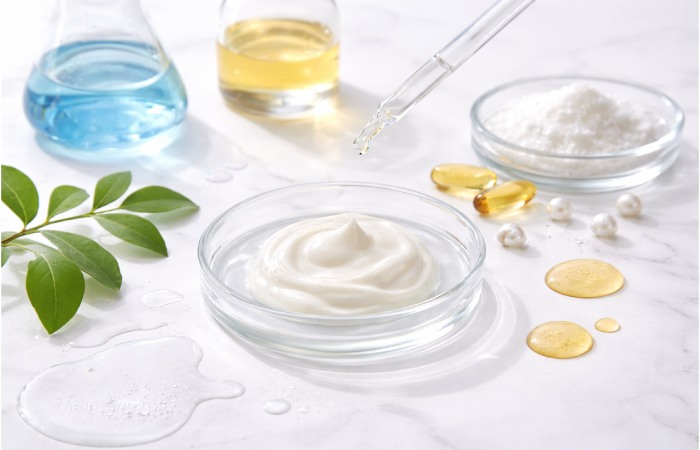
Kozicare combines multiple depigmenting and antioxidant ingredients commonly used in dermatology.
Kozicare is a skin lightening cream formulated with a combination of active depigmenting ingredients. It works primarily by inhibiting tyrosinase, the enzyme responsible for producing melanin — the pigment that gives skin its colour. When tyrosinase activity is reduced, melanin production slows down, which gradually fades dark spots and evens out skin tone.
Key ingredients include:
- Kojic Acid (3%) — a naturally occurring compound derived from fungal fermentation. It is one of the most researched skin-lightening agents in cosmetic dermatology.
- Alpha Arbutin (1%) — a stable, gentle derivative of hydroquinone that reduces pigmentation without the risks associated with hydroquinone itself.
- Glutathione (1%) — an antioxidant that has been studied for its skin brightening properties.
- Niacinamide (2%) and Vitamin C (2%) — well-established ingredients that support skin barrier function and reduce pigment transfer to the surface.
What Is Kozicare Cream Used For?
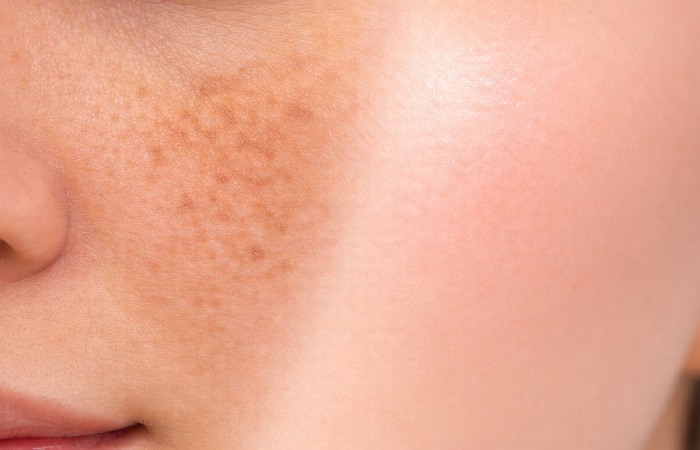
Depigmenting treatments aim to gradually reduce excess melanin and improve skin tone uniformity.
Scenario: Rahul, 34, returned from a beach holiday with significant sun tan on his face and arms. He tried a regular fairness cream for three weeks with no results. His pharmacist recommended Kozicare because it contains depigmenting actives rather than just cosmetic brighteners.
Kozicare cream is commonly used for the following skin concerns:
- Dark spots and age spots
- Post-inflammatory hyperpigmentation (marks left after acne or injury)
- Melasma (uneven pigmentation, often triggered by hormones or sun exposure)
- Sun tan and uneven skin tone
- Underarm darkness and other body areas with discolouration
Research supports kojic acid’s effectiveness for several of these conditions. A clinical study found that kojic acid reduces skin discolouration by increasing skin brightness in 75% of patients tested (PMC, 2023). A separate long‑term study using 1% kojic acid cream showed significant improvement in patients with melasma, with good overall tolerability reported during extended follow‑up, supporting its role in managing hyperpigmentation according to a 2023 clinical study on hyperpigmentation treated with kojic acid.
How to Use Kozicare Cream: Step-by-Step
Scenario: Sneha used Kozicare every day for a month and developed redness and irritation. The reason? She applied it to her entire face twice daily from day one, skipped sunscreen, and did not patch test. Most Kozicare side effects are caused by incorrect use, not by the product itself.
Follow these steps for safe and effective use:
- Cleanse first. Rinse your face with lukewarm water and pat dry completely.
- Apply a small amount. Take a pea-sized amount of cream and apply it only to the affected areas — avoid healthy surrounding skin.
- Massage gently. Use your fingertips in circular motions until the cream is absorbed.
- Use sunscreen during the day. Kojic acid makes skin more sensitive to UV light. Always apply SPF 30 or higher when using this cream.
- Start slowly. Begin with 2-3 times per week and increase gradually as your skin adjusts.
Can you use it overnight? Yes, Kozicare can be used at night as part of your evening skincare routine. Many users apply it before bed, as there is no sun exposure risk while sleeping. However, always follow the product label and your dermatologist’s guidance.
How Long Does Kozicare Cream Take to Work?
Scenario: Arjun stopped using Kozicare after three weeks because he saw no change. What he did not know is that melanin reduction takes time — the skin’s natural renewal cycle is 28-40 days, meaning results are rarely visible before week four.
Results vary depending on skin type, the severity of pigmentation, and consistency of use. A general timeline based on clinical evidence:
- 2-4 weeks: Skin may feel smoother and look slightly brighter.
- 4-8 weeks: Visible reduction in dark spots and more even tone.
- 3-6 months: Significant improvement for conditions like melasma, as supported by clinical studies.
Consistency is key. Missing applications or stopping too early will slow results. It is also important to manage expectations — Kozicare reduces excess pigmentation, it does not permanently change your natural skin colour.
Side Effects of Kozicare Cream
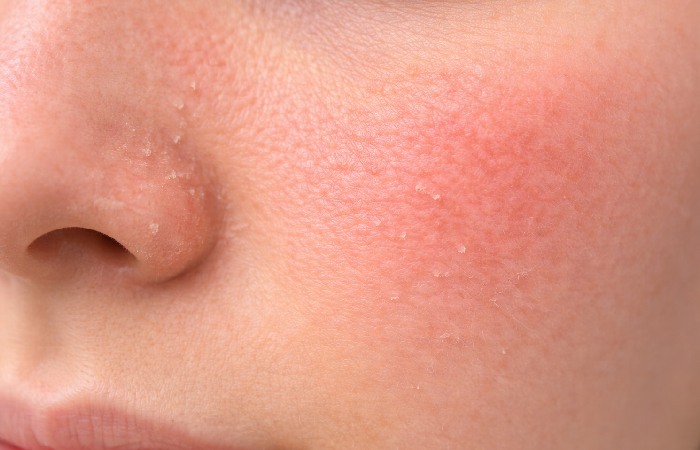
Active depigmenting creams can cause irritation if overused or applied without sun protection.
Scenario: Meera applied Kozicare twice daily on her full face from day one. By week two she had redness, flaking, and a burning sensation. She assumed the product was unsafe — but her dermatologist explained it was overuse on sensitive skin, not a product defect.
When used as directed, kojic acid is generally considered safe at cosmetic‑use levels, and a 2022 scientific review in MDPI Cosmetics supports its use for hyperpigmentation at concentrations around 1–2% when used appropriately, which is the range used in Kozicare cream.
Common side effects:
- Redness or mild irritation, especially on sensitive skin
- Itching or tingling at the application site
- Contact dermatitis — the most commonly reported reaction to kojic acid (Healthline, 2023)
Less common or more serious reactions:
- Increased sensitivity to sunlight, which can lead to sunburn if SPF is not used
- Swelling or rash — if this occurs, stop use and consult a dermatologist
Most side effects occur when the product is overused, applied too frequently, or used without sunscreen. Always perform a patch test before applying to larger areas.
Who Should Consider It — and Who Should Avoid It
Scenario: Two users, same product. Kavya has post-acne dark marks on normal skin — Kozicare works well for her. Her friend has eczema-prone sensitive skin — she develops a reaction within days. Same cream, different outcomes. Knowing whether you are in the right group matters before you buy.
Kozicare may be suitable if you:
- Have dark spots, post-acne marks, or sun-damaged skin
- Are looking for an alternative to hydroquinone-based products
- Want a multi-ingredient approach combining kojic acid, arbutin, and niacinamide
Avoid or use with caution if you:
- Have very sensitive or reactive skin
- Are pregnant or breastfeeding — consult your doctor first
- Have active skin conditions like eczema or open wounds in the area
- Have previously reacted to kojic acid or any of the listed ingredients
Does Kozicare Cream Really Work?
Scenario: Two people buy Kozicare on the same day. Person A uses it consistently every evening with SPF every morning — they see clear improvement in 6 weeks. Person B uses it occasionally, skips sunscreen, and spends time in the sun daily — they see no change and conclude the cream does not work.
The honest answer is: it can work, but not for everyone. Kozicare’s core ingredient, kojic acid, has decades of clinical research behind it and is widely used in dermatology. A review published in MDPI Cosmetics (2022) confirmed kojic acid is effective for treating hyperpigmentary disorders including freckles, age spots, and melasma.
However, results depend on the type and depth of pigmentation, your skin type, how consistently you use the product, and whether you use adequate sun protection. Superficial pigmentation (sun tan, minor dark spots) tends to respond faster and better than deeper conditions like melasma, which may require prescription-level treatment.
If you do not see improvement after 8-12 weeks of consistent use, consider consulting a dermatologist who can recommend prescription alternatives or combination therapies.
Frequently Asked Questions
What is Kozicare Cream used for?
Kozicare Cream is used to treat dark spots, sun tan, post-acne marks, melasma, and uneven skin tone. It works by inhibiting tyrosinase, the enzyme that produces melanin, to gradually fade excess pigmentation.
Is Kozicare Cream safe for daily use?
Yes, for most skin types. Start with 2-3 times per week to build tolerance, then increase to daily use if no irritation occurs. Always apply sunscreen during the day as kojic acid increases photosensitivity.
How long does Kozicare Cream take to show results?
Most users see visible improvement in 4-8 weeks with consistent use. Deeper conditions like melasma may take 3-6 months. Clinical studies on kojic acid confirm significant improvement in skin brightness within this timeframe.
What are the side effects of Kozicare Cream?
Common side effects include mild redness, itching, and contact dermatitis. More serious reactions like swelling or severe rash are rare. Discontinue use and consult a dermatologist if these occur.
Can Kozicare Cream remove tan?
Yes. Kojic acid reduces melanin triggered by sun exposure, helping to fade tan. However, continued sun exposure without SPF will reverse results. Sunscreen is essential when using this cream.
Can I use Kozicare Cream on underarms?
Yes, it can help reduce underarm darkness caused by hyperpigmentation. Patch test first as underarm skin is sensitive. Results take time and are not guaranteed for all skin types.
Can I apply moisturiser after Kozicare Cream?
Yes. Let Kozicare absorb for 2-3 minutes, then apply a gentle, fragrance-free moisturiser. This helps maintain the skin barrier and reduces dryness.
Is Kozicare Cream suitable for all skin types?
It is formulated for all skin types, but people with very sensitive or reactive skin should proceed with caution. Those with active skin conditions, or who are pregnant or breastfeeding, should consult a doctor before use.
Does Kozicare Cream permanently lighten skin?
No. Kozicare reduces excess or uneven pigmentation — it does not permanently alter your natural skin colour. If you stop using it or neglect sun protection, pigmentation can return.
Which is better — Kozicare or hydroquinone creams?
Hydroquinone is more potent but carries higher risks including ochronosis (skin darkening with prolonged use) and is banned in several countries for OTC sale. Kozicare’s kojic acid and alpha arbutin offer a safer, gentler alternative suitable for long-term use. For severe pigmentation, a dermatologist may recommend prescription hydroquinone under supervision.
Can I use Kozicare cream on private parts?
Intimate skin is significantly more sensitive and prone to irritation. Even though some people try kojic‑acid products in these areas, you should only do so if a dermatologist specifically advises it. Avoid applying Kozicare on broken, irritated, or mucosal skin (such as genital or inner folds).
Final Thoughts
Kozicare Cream is a well-formulated, multi-ingredient skin lightening product backed by clinical evidence for its key ingredients. Used correctly — with sunscreen, a patch test, and appropriate frequency — it is considered safe for most skin types.
That said, no over-the-counter skin lightening product is a one-size-fits-all solution. If you have persistent pigmentation, sensitive skin, or any underlying skin condition, the safest first step is always to speak with a qualified dermatologist.
Key Takeaways
- Kozicare Cream is a multi-ingredient skin lightening product best suited for dark spots, tan, melasma, and post-acne marks.
- Kojic acid, its primary ingredient, has strong clinical evidence supporting its safety and effectiveness at 1-3% concentration.
- Always use SPF 30+ during the day — kojic acid increases sun sensitivity.
- Start with 2-3 applications per week and patch test before full use.
- Expect visible results in 4-8 weeks; deeper pigmentation like melasma may take 3-6 months.
- Side effects are usually mild (redness, irritation) but stop use and see a dermatologist if severe reactions occur.
- It does not permanently change your natural skin colour — it reduces excess pigmentation only.
Conclusion
Scenario: After reading this guide, Priya from our opening scenario decides to try Kozicare — but the right way. She patch tests, starts every other evening, wears SPF 50 daily, and sets a realistic 8-week timeline. That is the approach this guide recommends.
Kozicare Cream is a credible, affordable option for people dealing with common pigmentation concerns in India. Its ingredient combination — particularly kojic acid and alpha arbutin — is backed by clinical research and widely used in cosmetic dermatology. For most people, it is safe when used correctly with sun protection.
That said, no OTC cream replaces professional advice. If your pigmentation is persistent, spreading, or worsening, consult a qualified dermatologist. They can determine whether a prescription-strength treatment or a different approach is more appropriate for your specific skin concern.
Used with realistic expectations, the right technique, and daily sunscreen — Kozicare Cream can be an effective part of a consistent skin care routine.
Key Takeaways
- Kozicare Cream is a multi-ingredient skin lightening product best suited for dark spots, tan, melasma, and post-acne marks.
- Kojic acid, its primary ingredient, has strong clinical evidence supporting its safety and effectiveness at 1-3% concentration.
- Always use SPF 30+ during the day — kojic acid increases sun sensitivity.
- Start with 2-3 applications per week and patch test before full use.
- Expect visible results in 4-8 weeks; deeper pigmentation like melasma may take 3-6 months.
- Side effects are usually mild (redness, irritation) but stop use and see a dermatologist if severe reactions occur.
- It does not permanently change your natural skin colour — it reduces excess pigmentation only.
Author Bio
Healthbloomin content is written to be practical and easy to understand across topics like health, technology, business, marketing, and lifestyle. Each article is based mainly on reputable, publicly available information, with AI tools used only to help research, organise, and explain topics more clearly so the focus stays on real‑world usefulness rather than jargon or unnecessary complexity.